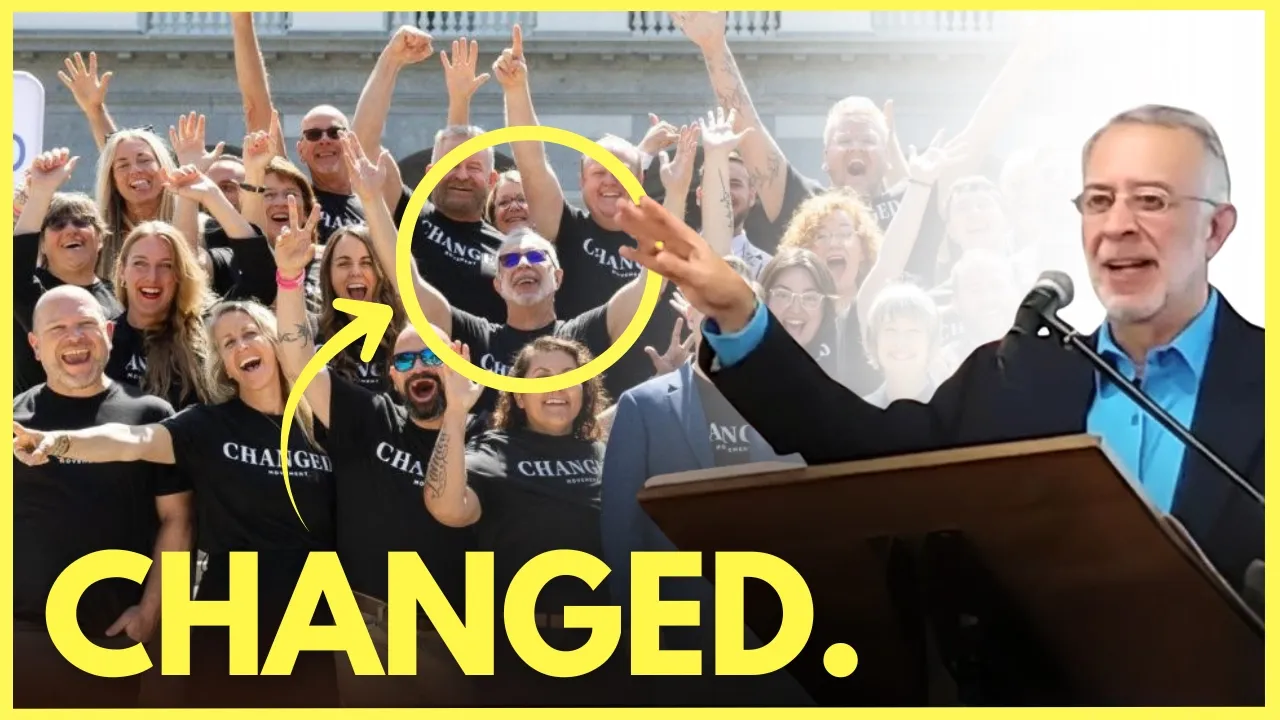
Dr. John Sottosanti on the Dr. J Show ep. 290
Subscribe to our newsletter to get this amazing report: Refuting the Top 5 Gay Myths https://ruthinstitute.org/refute-the-top-five-myths/
John Sottosanti, DDS, has walked an uncommon path, bringing together his professional expertise as a surgeon, his personal trials, and his search for meaning. His story shows how even worldly success — wealth, recognition, achievement — can leave the heart restless, and how faith can reorient our lives toward what truly matters.
Dr. Sottosanti reflects on the measurable ways that faith and religious practice strengthen the human spirit and even improve physical health. Drawing on respected research and his own experience, he explores how prayer, worship, and belonging to a faith community foster resilience, reduce anxiety, and build the enduring relationships we all need. He also shares how faith and science are not enemies, but complementary ways of seeking truth — and how his medical training deepened his respect for the mysteries of life.
His book, Mortal Adhesions, describes his struggles with pride, ambition, illness, and family discord — and the healing he found through faith. His insights are an invitation to consider what really sustains us in life’s trials, why hope rooted in something greater than ourselves makes all the difference, and how science and faith together can lead us closer to the truth.
Dr. John Sottosanti is a retired oral and maxillofacial surgeon, inventor, author, and speaker. A graduate of an Ivy League institution, he practiced surgery for decades in San Diego while earning national recognition in his field. His memoir, Mortal Adhesions: A Surgeon Battles the Seven Deadly Sins to Find Faith, Happiness, and Inner Peace, chronicles his spiritual journey, personal challenges, and battle with cancer. Passionate about the integration of faith and reason, he writes and speaks on the proven connection between religious practice and human flourishing.
Could Religious Faith Make America Healthy Again? | Newsmax.com
https://www.newsmax.com/politics/kennedy-secularists/2024/11/27/id/1189595
Authors of the Medical Bible:
Harold G. Koenig, M.D., M.H.Sc.: https://spiritualityandhealth.duke.edu/index.php/harold-g-koenig-m-d/
Tyler J VanderWeele: https://hfh.fas.harvard.edu/people/tyler-j-vanderweele
Find John and his book here:
Mortal Adhesions – A Surgeon Battles the Seven Deadly Sins to Find Faith, Happiness, and Inner Peace: https://mortaladhesions.com/
Chapters:
00:00 Introduction to Faith and Health
03:01 The Science Behind Religious Practice and Health
05:51 Harvard Studies on Happiness and Relationships
09:04 The Impact of Church Attendance on Longevity
11:49 Exploring the Nurses Study
15:44 The Role of Hope in Health Outcomes
19:43 Suicide Rates and Religious Practice
22:00 Challenges in Medical Acceptance of Religion
26:49 The Future of Religion and Health Research
29:06 The Journey to Writing a Memoir
30:25 Exploring the Seven Deadly Sins
33:17 Faith and Overcoming Adversity
36:31 The Impact of Family Dynamics
39:52 Reflection on Death & Reconciliation after Divorce
47:49 Supernatural Experiences and Faith
52:42 Conclusion
Transcript
(Please note the transcript is auto-generated and likely contains errors)
[00:00:00:00 – 00:00:25:00] Dr. Jennifer Roback Morse:
Hi, everyone. I’m doctor Jennifer Roback Morse, founder and president of the Ruth Institute, an international interfaith coalition to defend the family and build a civilization of love. Today, I’m delighted to have Doctor John. So to Santi as my guest doctor. So to santé is a retired oral surgeon and inventor. He’s also the author of his memoir entitled Mortal Adhesions.
[00:00:25:02 – 00:00:48:17] Dr. Jennifer Roback Morse:
A Surgeon Battles the Seven Deadly Sins to Find Faith, happiness, and Inner Peace. In this book, Doctor Society describes his personal experience of using religion and science to battle an aggressive prostate cancer. That experience has made him a passionate defender of the relationship between faith and reason. He’s been cancer free for 15 years now.
[00:00:48:17 – 00:00:53:06] Dr. Jennifer Roback Morse:
Doctor John Sottosanti. Welcome to the doctor J. Show.
[00:00:53:08 – 00:00:56:23] Dr. John Sottosanti:
Thank you very much, Jennifer. I appreciate it.
[00:00:57:01 – 00:01:10:23] Dr. Jennifer Roback Morse:
Yeah. It’s great to see you again. We have, we have a history in San Diego, so we know each other a little bit. And I saw about your new book, you know, so I was interested to see your book, but then what really caught my eye in it and, told me that I should invite you on.
[00:01:11:03 – 00:01:31:07] Dr. Jennifer Roback Morse:
Was the op ed that you did for the Newsmax magazine, called could Religious Faith Make America Healthy Again? Because we’ve done a little bit of work on that on this channel. We’ve had other guests talk about this connection between regular religious practice and, and good health. And so I thought, oh, this will be interesting. Have an MD, have a doctor.
[00:01:31:11 – 00:01:34:01] Dr. Jennifer Roback Morse:
You’re not an MD. You’re you’re you’re a dental surgeon.
[00:01:34:01 – 00:01:36:12] Dr. John Sottosanti:
Dental surgical training. Right.
[00:01:36:14 – 00:01:56:16] Dr. Jennifer Roback Morse:
That’s right, that’s right. So in this in this up Ed but the the other guy who talked about this topic with us was a guy who is what went on for more of the philosophical side of it. And so I thought, well, who better than to have somebody with medical and scientific training to, to cast some light on this subject?
[00:01:56:16 – 00:02:08:11] Dr. Jennifer Roback Morse:
So in the in the article that you wrote a little bit ago, you wrote about the relationship between religious faith and personal health, what kinds of studies did you cite when you wrote that article, John? Well, in an.
[00:02:08:11 – 00:02:48:12] Dr. John Sottosanti:
Article that’s that length. You really can’t get into a lot of studies. So more or less, I talked about that. There are many studies and there are there’s probably close to 4000 studies, of which 2500 are very good. And in those studies they can they all look at large groups. Most of them do anyway, and they show a decrease in anxiety, increase in depression, decrease in substance abuse of those that attend religious services and have a quite a good, relationship to a faith.
[00:02:48:14 – 00:02:59:12] Dr. John Sottosanti:
It doesn’t have to be one particular faith. In the article I mentioned this book, which I’d like to hold up because it’s in some ways it’s it’s the Bible.
[00:02:59:14 – 00:03:09:22] Dr. Jennifer Roback Morse:
Of, if you could say you can call it the Bible. Look at that, look at that. And, and, and and who’s the divine author of this particular Bible? John.
[00:03:10:00 – 00:03:40:02] Dr. John Sottosanti:
There are three authors and they’re they’re both. Well, they’re from two universities and two excellent universities. They’re from they’re from Harvard and they’re from Duke University. The lead author is Harold Koenig. And, besides him then from and he’s from Duke. Besides him, Tyler, Vander Will is a biostatistician, from Harvard and then a doc, another doctor.
[00:03:40:02 – 00:04:00:23] Dr. John Sottosanti:
Doctor petite. And having a statistician as part of the group is excellent because he was one of the people or not the person that really made sure that the studies that they quote in the book are very good studies. And as I said, there are some where like a total of 500, excuse me, 2500 studies.
[00:04:01:00 – 00:04:23:22] Dr. Jennifer Roback Morse:
Yes, yes. And I, I can tell you that from other areas, if you’re doing pro-life work or you’re examining the impact of marriage on various kinds of indicators, there’s there are junk studies and there are good studies. And so having somebody who knows their way around really adds to the credibility of that volume. And so you said, this is a nice big fat book.
[00:04:24:00 – 00:04:45:17] Dr. Jennifer Roback Morse:
What are some of the indicators that they talk about? You mentioned a few depression anxiety, substance abuse. Those are the things that seem to be impacted by regular religious attendance. So let’s let’s talk about the let’s talk about the dependent variable religious practice. What are some of the indicators or measures of religion that seem to have these positive health effects?
[00:04:45:19 – 00:05:32:03] Dr. John Sottosanti:
Well, the easiest thing to measure is church attendance. Again, this information is pretty much self-reported. But that’s a very good indicator. Yeah. Certainly also can talk about things like prayer and meditation. Religion has a lot of benefits because not only, if you’re going on a regular basis, you’re very involved, but you’re also making relationships. A lot of the things that religious attendance and religious belief brings into it, you could find in other groups, but it’s very hard to find other groups that’ll bring people together.
[00:05:32:03 – 00:05:57:12] Dr. John Sottosanti:
And this type of intensity where there’s prayer, meditation, fellowship, belief in a divine source which can give you comfort and hope. And so these are the things that that they looked at, I think, but we can talk about it now or later. But I, I like to talk about the Harvard nurses study. In fact, I like I talked about Harvard a lot and I didn’t go there.
[00:05:57:12 – 00:06:28:11] Dr. John Sottosanti:
I went to a competitive Ivy League college. So what, what Harvard has done, it started back in the 1930s. They actually started a longitudinal study. And it’s the most quoted study in the world. And, it’s a unhappiness and longevity, good health, etc.. And what makes it interesting, again is that it started in the 30s with about 700 people.
[00:06:28:13 – 00:06:57:08] Dr. John Sottosanti:
They were either basically richer kids from Harvard University as freshmen or poorer kids from the, ghetto areas of Boston. And they follow these people for quite a few years, will eventually 80 something years, the ones that lived. And they did eventually add on the offspring and the spouses of that original group of 700 but total they there’s probably less than 3000 people involved.
[00:06:57:10 – 00:07:30:19] Dr. John Sottosanti:
But after all this work and 80 something years, the one study that they, the one conclusion that they came up with is that if if you, look at all the data, what they find out is the number one thing that makes people happy is having enduring relationships, strong, enduring relationships. The more the better. And then you have to start looking at, well, how do you get those relationships?
[00:07:30:21 – 00:07:53:04] Dr. John Sottosanti:
And the book that came out after this study or study is still ongoing, but the book that’s out there talks about wealth, family life, and of course, this started back in the 1930s when families are really strong and marriages stayed together. You know, now we’re dealing yeah. Now we’re seeing marriages breaking apart and, you don’t get it there.
[00:07:53:04 – 00:08:21:03] Dr. John Sottosanti:
Then they talk about the workplace. And of course, with Covid, people don’t go to work so much anymore. And not only that, but people don’t stay at the jobs the way they used to. They used to stay at their jobs for 20 or 20 years or so, maybe 10 to 20 on the average. And today the young people are, say, in their 20s, the average number of years that they spend at the workplace is about two before they they move.
[00:08:21:05 – 00:08:54:19] Dr. John Sottosanti:
So how do you get enduring relationships in the way that it was described by the author, the lead author of the study, now, the lead author has changed over the years because of the time that has passed. But the number one thing, he says, that you can tell if you have good relationships is who can you call in the middle of the night if you have a panic attack or something like that where you don’t need to go to the emergency room, but you need people to come over, maybe and hold your hand and talk to you.
[00:08:54:20 – 00:09:16:04] Dr. John Sottosanti:
How many would come over? And he said, you need to have at least one person that would do that. And I was thinking of our group at church and the number of people that would come over if I call them, and I was counting up to 20 people I think I could call. And I don’t think there are very many places you can go and get that kind of response.
[00:09:16:06 – 00:09:25:08] Dr. Jennifer Roback Morse:
So did the Harvard study, point to religion as one of the in church attendance, as one of the factors that built those, relationships? John.
[00:09:25:10 – 00:09:48:04] Dr. John Sottosanti:
That’s the interesting thing about Harvard. There’s the secular Harvard, and then there’s a smaller the religious Harvard. And because they they do have a, a school that they look at, look at, religion, but overall the university tends to be very secular. So this study was very secular. No, they hardly mentioned religion at all, if at all.
[00:09:48:06 – 00:10:07:09] Dr. John Sottosanti:
And that really was bothersome to me. I actually went out and purchased the book and read through the entire book to see what they would say would give you enduring relationships. And they mentioned things, of course, like the family, etc. like I’ve already talked about and work, but then they would say, well, join a bowling team. Yeah.
[00:10:07:11 – 00:10:10:23] Dr. Jennifer Roback Morse:
You’re right, I that like that’s gonna do it. Like that’s going to take the place.
[00:10:11:01 – 00:10:15:18] Dr. John Sottosanti:
Of enduring relationships. All right. What are you going to get on your bowling team. And then.
[00:10:15:18 – 00:10:17:03] Dr. Jennifer Roback Morse:
They say it’s the.
[00:10:17:05 – 00:10:17:07] Dr. John Sottosanti:
Go.
[00:10:17:07 – 00:10:42:12] Dr. Jennifer Roback Morse:
Ahead. It was the the more the more likely, relationship would be that if you have strong families and you have a church community, you’re more likely to be able to put together a bowling team that will last based on the underlying preexisting community, that the guys who go to church together also go play pool together or whatever, you know, and that the idea that the that the bowling team is going to be the thing that holds, holds it together is it’s not.
[00:10:42:15 – 00:10:48:20] Dr. Jennifer Roback Morse:
No, not terribly plausible. Did you use the term the nurses study? Why was this called the nurses study?
[00:10:48:21 – 00:11:18:15] Dr. John Sottosanti:
Okay. No, now I’m talking the first the study I’m talking about now that started in 1938 was the Harvard Longitudinal Study, not the nurses study. The nurses study started somewhere original. Nurses study probably started around the 70s. But, the part of the nurses study that I’m most interested in, started I probably believe it started in the 80s, but the main thing we need to know is how many people were involved.
[00:11:18:17 – 00:11:48:03] Dr. John Sottosanti:
There were something like 77,000 nurses, female nurses, mostly middle age and older. So you could look at it several things. You could ask them the question, how do you? Well, once we divided the group into church goers and nuns, church goers, we would say to the church goers, how often do you go once a week, more than once a week, or occasional?
[00:11:48:05 – 00:12:18:11] Dr. John Sottosanti:
And that that group of 77,000, they followed with the questions about church, are you still going? Etc. they did it every two years and they followed them for 16 years, which is quite long, especially when you’re talking about 77,000 people. And the results were actually quite amazing. If the nurses said that they went to church more than once a week.
[00:12:18:11 – 00:12:50:15] Dr. John Sottosanti:
So they were very devout. Their decrease in mortality over the course of the study, remember, these are older people. So quite a few of them did die is certainly not half, but a bunch of them did die. And when we look at it, they had a 33% decrease in mortality. If they went to church more than once a week compared to the non churchgoers, and if they went to church once a week, which is probably average.
[00:12:50:17 – 00:13:19:05] Dr. John Sottosanti:
The reason the reduction was something like 23% reduced mortality. And even if they said they occasionally went to church like major holidays, they received something like a 11% reduction in mortality. So it showed that when you take a large group of people and divide them into churchgoers and non-church goers, the church goers are going to live longer and it amounts to years.
[00:13:19:07 – 00:13:43:09] Dr. Jennifer Roback Morse:
So. And yes, and the interesting thing about that is it because they’re all female nurses, around the same age group, you’ve already got you’ve already factored in a number of factors, right? So there are already people who are interacting with the public. They’re not sitting home by themselves. You know, they have a job that calls out to them in a social kind of a way and so on.
[00:13:43:11 – 00:14:02:16] Dr. Jennifer Roback Morse:
And so they would probably start with a certain number of things in common. And so to see that one variable make that much difference is, is pretty dramatic. Now, is that the type of information that would that was cited in that Handbook of Religion and Health that you held up a moment ago, is that the type of study that they compiled into that handbook, John?
[00:14:02:18 – 00:14:29:20] Dr. John Sottosanti:
Yeah, they sure did. They looked at all the goods, all the studies and none of them, I mean, that study was robust in, in, in the standpoint of there were easy things to measure. And there was a huge sample size at 77,000. You look look at that. Compared to the Harvard study, the longitudinal study, they had only maybe 2600 total people in the study, even though it wasn’t 80 something years.
[00:14:29:22 – 00:14:56:05] Dr. John Sottosanti:
So, the nice thing about the book is that you can take any topic that you’re interested in. Let’s take cancer. Just attending, you know, church, it doesn’t have to be church. It can be anything. It can be a mosque. It could be a temple. But you, if you go to a religious service, those people, there are studies that show will get less cancer.
[00:14:56:07 – 00:15:16:15] Dr. John Sottosanti:
Well, how does that happen? It isn’t anything magical. I mean, they don’t look at they don’t talk about the studies. I don’t talk about divine intervention. In other words, is there an Almighty God that’s going to help these people? I mean, you know, certainly, those of us that believe, believe that might be possible. Then I’ll look at that, though.
[00:15:16:15 – 00:15:43:05] Dr. John Sottosanti:
What they do look is that that people who go to church, they have a number of things in common. They tend to be less anxious, more calm. They have hope. Not only hope here on earth, but they have hope in an afterlife, most of them. And, that’s an interesting topic. Jennifer. You know, belief in an afterlife.
[00:15:43:07 – 00:16:05:09] Dr. Jennifer Roback Morse:
Right? Hope is a very important fact in a person’s life, right? I mean, because the opposite of hope is despair, right? And if you’re despairing, you’re giving up on life, you know, perhaps. And so it’s that that strikes me as a plausible mechanism. You know, for how religious practice could be involved in improving people’s health. So I imagine.
[00:16:05:13 – 00:16:27:07] Dr. Jennifer Roback Morse:
Now, let me let me ask you this. You’ve got medical training, you’ve got scientific training. What do you think are the most plausible explanations for the correlation? Okay. We’ve established there’s a robust, pretty robust correlation between regular rigid, regular religious practice and a bunch of other indicators. A lot of them. And we we see this in social science, too, John.
[00:16:27:09 – 00:16:52:03] Dr. Jennifer Roback Morse:
You know, regular religious practice is a protective factor. That’s what we call it. It’s a protective factor against divorce and, you know, teen pregnancy and a bunch of different things. You know, more the more of the social things in your in your opinion, what do you think is the most plausible, causal mechanism that relate religious attendance, religious practice with the health outcomes?
[00:16:52:05 – 00:17:25:02] Dr. John Sottosanti:
I think there’s less anxiety and there’s a biochemical aspect of that. Anybody that’s under stress, you know, the old flight fight response kicks in. You’re all familiar with that. And basically cortisol goes into the system. Then what cortisol does in the immediate say attacked by a tiger that helps you react. But in any kind of long term, that’s going to cause you a lot of problems.
[00:17:25:02 – 00:17:57:18] Dr. John Sottosanti:
You know, in the immediate, you may see things like, increased blood pressure, obviously heart rate and some things related to the cardiovascular thing. But in reality, and long term, you’re going to see things like, well, increased inflammation in the body. And when you have increased inflammation in the body that does a lot of things. And one of the main things I specialize is periodontal disease, which is the number one reason in the world why there’s tooth loss.
[00:17:57:18 – 00:18:30:08] Dr. John Sottosanti:
And that’s an inflammatory disease. But cancer is triggered by inflammation. And so many other things are too. And so what what we want to do is calm people down. And I noticed in my own practice that. I would talk to my patients a lot and I could more or less sense sometimes when someone was religious and maybe they would let me know or they’d say something, and then I would bring up religion with those people.
[00:18:30:08 – 00:19:04:21] Dr. John Sottosanti:
And what I found is, is that they tended to have a more positive attitude. They followed my instructions better, and when I did surgery on them, they seemed to heal quicker and better. And that was scientifically proven. I saw this 40 years ago, but about 20 years ago there were several studies, one out of Canada and a couple of other, I don’t know the exact citations on that right now, but there is definitely, if you look up in the literature or, you know, today we can Google, today we can use artificial intelligence and find all kinds of things.
[00:19:04:23 – 00:19:30:10] Dr. John Sottosanti:
But if you asked, are there studies out there that show, that there’s a relationship, between church goers and healing? You’ll find several of the certainly more than several studies, but there are studies out there. But getting back to the book and, you know, can I hold the book up again? It’s so thick that they have a wonderful index so that you can pick anything that you’re interested in and learn about it.
[00:19:30:12 – 00:20:08:16] Dr. John Sottosanti:
I mean, for instance, I just decided to pick up suicide as a topic and it right away it said it was it says the World Health Organization says that in the world, every 40s somebody commits suicide, which is an interesting statistic. Never thought about that. But of course, that’s a big world. But that’s a lot of people. And of course, ever since Covid and an addiction to, devices and social media, you know, the suicide rate in America has gone up dramatically, particularly if you’re an expert on a lot of this stuff.
[00:20:08:16 – 00:20:45:18] Dr. John Sottosanti:
So don’t hesitate to to, to talk over me. But the, young women, those young girls are adolescents. I think the suicide rate has gone up considerably. In fact, you know, a lot. Covid did a lot. But I think if we look at what are called the basically the diseases of despair or deaths of despair, in other words, when people have despair, they tend to die from certain things, particularly maybe someone in their 20s and what we often see is death by alcohol.
[00:20:45:20 – 00:21:11:14] Dr. John Sottosanti:
You know, that would be cirrhosis of the liver. But we also see death by suicide. And, and we started seeing deaths of despair go up a lot somewhere around 2015. And the population in the United States actually started dropping, I believe, before Covid hit. Of course, hope Covid had a big made a big factor on that.
[00:21:11:14 – 00:21:36:05] Dr. Jennifer Roback Morse:
Do so. But but getting back to the connection with religion now you know so we’ve I think a lot of people are aware of the concept of deaths by despair, whether it be substance abuse, suicide, self-harm, a lot of those indicators of despair have increased. And even when the suicide is not a completed suicide, suicide attempts suicide ideation.
[00:21:36:05 – 00:21:56:12] Dr. Jennifer Roback Morse:
You know, those type of things are, are are a problem now, especially among the young in a way that they have that they hadn’t been before. If you take out your big book there again John the Doctor. So to Santa, you take out your big book and you ask, what’s the correlation or what’s the relationship? What do we know about religion and religious practice and suicide rates?
[00:21:56:12 – 00:21:58:15] Dr. Jennifer Roback Morse:
What is it going to tell us? What does it say?
[00:21:58:17 – 00:22:18:00] Dr. John Sottosanti:
Yeah, well, one of the studies that I came across, a doctor Keane, was involved in this particular study. You remember one of one of the there’s two types of study and any one study where you do a brand new study and you get it published. The second thing is called meta analysis. This is when there are hundreds of studies out there on a particular topic.
[00:22:18:02 – 00:22:38:17] Dr. John Sottosanti:
Then somebody in our group, in this particular case, a group of say, 2 or 3 people, they review all the studies, they throw out, the ones that are not very good. And of course, you can look at the journals that published them. And that’s not a peer review that studies have, but having a biostatistician statistician in with your group is very helpful.
[00:22:38:19 – 00:23:04:08] Dr. John Sottosanti:
But I know that one study a Doctor Keaney had to do was a Canadian study, I believe, and they looked at a large group of people. I was young man and and they followed them over a number of years, and they looked at a lot of suicide attempts. Now that all the suicides are very few of the suicides were actually successful, but they divide them up into religious and non-religious young men.
[00:23:04:10 – 00:23:35:19] Dr. John Sottosanti:
And the, the group that was religious had much 57% lower need for medical help after the suicide attempt. And what does that tell you? A serious suicide attempt, like a drug overdose where you take a bottle of pills, you got to go to the hospital and pump your stomach and and yours medical intervention, where there can be other types of suicide attempts that are very mild, that is, that are handled by the parents.
[00:23:35:21 – 00:23:53:10] Dr. John Sottosanti:
So the 57%, you know, the religious goers, it was a dramatic reduction or the ones that did not go to church at all. That’s just one thing I picked up when I looked up suicide. But there are so many things. Again, a thousand pages in 2500 studies.
[00:23:53:11 – 00:24:15:04] Dr. Jennifer Roback Morse:
Right? But and you mentioned meta analysis. This is a good time to mention because I’ve interviewed somebody else who’s done meta analysis on the the relationship between abortion and mental health. And she explained to us, that there’s a whole protocol for what studies you include, how you weight them according to the number of observations that they might have.
[00:24:15:04 – 00:24:32:14] Dr. Jennifer Roback Morse:
You might give more weight to one study rather than others, and so on and so forth, to show that just so people are aware, when you’re talking about a meta study or a meta analysis, there’s a whole protocol. You don’t just pick out the ones you like and throw out the ones you don’t like. You know, some people might be inclined to do that, but no, that’s not what we’re talking about here.
[00:24:32:14 – 00:24:50:04] Dr. Jennifer Roback Morse:
They’ve got this. They’ve got a whole system of systematically evaluating that. Why do you think that the medical establishment is reluctant to give credence to the correlation between religious practice and, and good health? Doctor. So to on do you have a theory about about that what what’s your theory.
[00:24:50:06 – 00:25:15:01] Dr. John Sottosanti:
Yeah. I think that number one, the medical establishment tends to be more secular. And and second of all, they, they really like numbers that are exact. And when you’re dealing with religion, how do you put a meter on somebody that will tell you, like a dipstick or a litmus paper that will say how religious this person is.
[00:25:15:01 – 00:25:46:22] Dr. John Sottosanti:
So it’s all self-reported. So they definitely don’t don’t like that. Then there’s the feeling of professionalism. There is a belief among physicians that we need to be professional. And since since religion is controversial and some people feel very uncomfortable that anyone their usually not that anxious to bring it up. And I don’t think they’re that aware of the studies because they don’t get the training in medical school.
[00:25:47:00 – 00:26:17:12] Dr. John Sottosanti:
One of the things that, there’s an NIH, NIH group, but that Doctor King is involved with that, it’s a research group on looking at religion and health. And one of the things that they’re looking at is how to get more qualified teachers in medical school that understand religion, and then they’re afraid, some of the physicians are afraid if I start talking religion, the patients are going to think I’m trying to push my religion on them.
[00:26:17:14 – 00:26:38:17] Dr. John Sottosanti:
So there’s a variety of reasons why it hasn’t happened yet. And the other thing is physicians want things to happen now. In other words, you’re sick. I write you a prescription for a drug, and in seven days, your strep throat goes away, or you have a little tumor, and I go in there and remove it and it’s gone.
[00:26:38:19 – 00:27:04:21] Dr. John Sottosanti:
So there’s that emphasis of wanting something to happen to me. Right now. And then there’s the money aspect of it. You know who funds the research? For, religion, certainly. I don’t know of any churches that fund the study. So you have to look and hope that NIH is going to fund some of them. But a lot of the money for medical research comes from companies.
[00:27:04:23 – 00:27:33:00] Dr. John Sottosanti:
They can be the companies that make the drugs. They can be the company that make the surgical instruments. And and so and, you know, there there’s, much more money involved, both to the practitioner and to the companies, you know, with these more dramatic surgery drug type interventions, even though there is enough information out there that says ultimately you’ll get a better result.
[00:27:33:02 – 00:28:04:03] Dr. John Sottosanti:
But if you talk about a 20% or a 10% or 30% increase in healing results, I mean, maybe their willingness to to accept an 80% result and not deal with the difficulties of getting into religion with their patients. I think we also have to start with the patients themselves. We have to start thinking about, well, how do how does a patient learn that there is a relationship between religion and health?
[00:28:04:05 – 00:28:24:20] Dr. John Sottosanti:
So we need to start teaching. We have two things. One. One is we have to get the media more interested. So that’s difficult to do. But I think they’re going to be a lot of changes coming up in the next few years. And and maybe the government, maybe NIH maybe will be more involved with some of these, these programs.
[00:28:24:20 – 00:28:35:04] Dr. John Sottosanti:
Because in the long run, not only do you have a healthier society budget, but it costs you less money. I mean, sending people to church doesn’t cost much money.
[00:28:35:06 – 00:28:53:02] Dr. Jennifer Roback Morse:
Well, but, you know, a lot of people, I think, are aware that religious practice make certain demands on you and places certain limits on your behavior. You know, certain things. You’re not allowed to do. Right. And, and you’re and you’re not allowed to do it, not because you’re going to go to jail, but because your pastor says you you really shouldn’t be doing this.
[00:28:53:02 – 00:29:10:19] Dr. Jennifer Roback Morse:
This is not could be a good thing. It’s not it’s not the same kind of constraint as a legal constraint. But nevertheless, people in America especially have gotten used to being able to do whatever they want without anybody saying anything negative about it, which means that you won’t do it. You have the whole negative natural consequence falling down on your head.
[00:29:10:19 – 00:29:34:18] Dr. Jennifer Roback Morse:
You know of you because nobody warned you off before you got to the beginning, before you started down that path that was going to have those results. You you wrote a memoir here recently. Mortal adhesions a surgeon battles the seven deadly sins to find faith, happiness, and inner peace. This is your memoir. And you wrote this book the year it came out recently.
[00:29:34:18 – 00:29:54:13] Dr. Jennifer Roback Morse:
The the story ends in 2008. And so I wanted to ask you, before we talked about it in detail, what prompted you to write this memoir at this particular time of your life? And going up to that particular point in your life, I mean, I want to know what happened since 2008, but whatever.
[00:29:54:15 – 00:30:11:20] Dr. John Sottosanti:
Well, the book is near and dear to my heart, so I’ll hold it there. What I point out in the book and this you you alluded to the fact that people don’t like rules, but, you know, there’s Jennifer, you take a child who has Paris and let the child do whatever they want. What do you have? You have.
[00:30:11:20 – 00:30:15:12] Dr. Jennifer Roback Morse:
Chaos brat, a brat, a brat.
[00:30:15:14 – 00:30:40:07] Dr. John Sottosanti:
Deborah. That’s true. And so people have to realize that you may think you’re getting what you want to get, but there’s a price to pay. And I was a perfect example of that. That’s why I talk about the seven deadly sins. Let’s just quickly go over them. Right. Pride, envy. I want more because he has more right? All right.
[00:30:40:09 – 00:31:05:00] Dr. John Sottosanti:
Wrath or anger? I want it my way right now in the book talks about Margaret and I. You know, I want to do this. I want to go on this trip. I want to, well, I want these things. So, pride. Envy. Wrath, sloth. Laziness. Laziness can mean a number of things. Could be laziness. And just in your, your work and every day function.
[00:31:05:00 – 00:31:28:07] Dr. John Sottosanti:
But it can also mean spiritual laziness. Not really worrying. Worrying about the big picture, the meaning of life. What is the meaning of life? You know, a good book. Another good talk. I like to talk about books. Victor Frankl’s man search for meaning. The meaning of life. You know, and, and it’s one thing religion tends to give you is more of an idea that there is meaning to life and afterlife.
[00:31:28:09 – 00:31:52:06] Dr. John Sottosanti:
So, greed, avarice, greed. I want more. And I work my own life as as I told. And I tell in the book, I really worked hard getting all these things. Big House over the ocean and Mercedes-Benz every year. But, you know, fairly good sized bank account and money didn’t buy me happiness. I even had all kinds of pride.
[00:31:52:06 – 00:32:02:06] Dr. John Sottosanti:
I mean, pride I had I had awards from from professional rewards, and I had patients who were Nobel Prize winners. Did you read the chapter on Francis Crick?
[00:32:02:08 – 00:32:05:19] Dr. Jennifer Roback Morse:
I did, were you were trying to talk them into being a believer?
[00:32:05:21 – 00:32:07:09] Dr. John Sottosanti:
That’s right.
[00:32:07:11 – 00:32:08:11] Dr. Jennifer Roback Morse:
That was quite something.
[00:32:08:11 – 00:32:20:00] Dr. John Sottosanti:
No, no, no, there’s a strict the co-discoverer of DNA. I mean, what’s the hardest thing in medicine today is DNA? Well, Francis Crick was my patient for 20, 20 years. A very good.
[00:32:20:01 – 00:32:23:04] Dr. Jennifer Roback Morse:
Doctor of his teeth. You took care of his teeth.
[00:32:23:04 – 00:32:31:08] Dr. John Sottosanti:
I scrape his feet. But I could fight. Converted him, I tried. No, we had a good, good debate. So,
[00:32:31:09 – 00:32:37:20] Dr. Jennifer Roback Morse:
So where were we? Pride. Envy. Wrath. Greed. Greed.
[00:32:37:22 – 00:32:45:04] Dr. John Sottosanti:
Okay. Gluttony. Guilt. Right. You tend to eat too many rich foods in lust.
[00:32:45:06 – 00:32:48:18] Dr. Jennifer Roback Morse:
Lust? That’s the one that’s killing it. That’s the one we study all the time over here.
[00:32:48:18 – 00:33:19:22] Dr. John Sottosanti:
Well, the movies, the chapter on the movie star. That was my patient that came through from L.A. out of San Diego. That was a real temptation. So, yes. So the problem is all those things, all the success that people want, what does it do? Ultimately, it brings stress because first of all, you work too hard many times and then you drink too much, etc. and then you have all this money and maybe you buy things you shouldn’t do, or you do things you shouldn’t do.
[00:33:19:23 – 00:33:41:07] Dr. John Sottosanti:
All of a sudden you start having problems. I had a an employee that made a major embezzlement in the office cost us probably hundreds of thousands of dollars. Certainly by today, dollars dollars and almost a half $1 million in which we paid a contractor ran off. He ran off with all our money. He did complete the job, but he didn’t pay the subcontractors.
[00:33:41:07 – 00:34:11:09] Dr. John Sottosanti:
So after paying him for the whole job, we had our pay, all the subcontractors or we couldn’t practice, we couldn’t open our doors. The city would shut us down because of the lawsuits we were getting for not paying them. Or they call them liens. And, we kept getting lean letters, so the stress caused me unbelievable aggravation. I couldn’t sleep, I had gastrointestinal pain, back pain, neck pain.
[00:34:11:11 – 00:34:42:23] Dr. John Sottosanti:
And finally I realized what a difference religion makes. And then you found out in the book that in 2008. So 2001, I began my conversion or a reconversion reversion to the faith. And then in 2008, I was hit with a major cancer diagnosis. And religion helped me get through it. It gave me hope and prayer and meditation and and and and so all I can say is 15 years have passed.
[00:34:43:01 – 00:35:06:22] Dr. John Sottosanti:
I’ve been cancer free for 15 years. So I have to say that faith and not only helped me get through it emotionally, but I think there was there was a physical change that I had because all my numbers are so much better than the doctors ever predicted. And I really attribute that to religion. And then I also thought that God was good to me.
[00:35:07:00 – 00:35:27:21] Dr. John Sottosanti:
You’ve heard the hound of Heaven story. The How There is a Heaven is a poem. But but God sometimes go out comes after some people, and he came after me. And, I almost had five deaths. I can’t say I had a near-death experience where my heart stopped, but I was in two. I was in a hotel fire on the top floor.
[00:35:27:23 – 00:35:53:23] Dr. John Sottosanti:
Almost died there. I almost died in a house fire trapped in a basement. The book tells you all this, as you know. And. And yet somehow I survived, and I learned lessons, and I. I felt I just needed to share this with people. Once, 15 or 20 years after treatment from the prostate cancer went by, you know, I felt that I really had a story that had some meaning and hope for people, and that’s why I wrote the book.
[00:35:54:01 – 00:35:59:22] Dr. John Sottosanti:
And I also have part two, the sequel coming, but I haven’t. I learned that.
[00:36:00:00 – 00:36:05:21] Dr. Jennifer Roback Morse:
But the point is, after 15 years cancer free, you felt you could say, I’ve been cured. I’m really cured.
[00:36:05:22 – 00:36:07:14] Dr. John Sottosanti:
That’s right, that’s right.
[00:36:07:15 – 00:36:24:06] Dr. Jennifer Roback Morse:
Among other things. Among other things. And one of the things that you talk about in here quietly, you talk about your family a lot. You talk about your your parents and your grandparents and so on and the meaning of family. So, you know, I will. I’m acquainted with you and Margaret. We’ve seen each other socially in San Diego back in the day.
[00:36:24:06 – 00:36:46:22] Dr. Jennifer Roback Morse:
When I lived there, I really felt like in many ways, this book was a love letter to Margaret, because there were many ways in which you showed your appreciation for Margaret. Why don’t you tell people just a little bit about your relationship with her, but no more than what you told in the book. You’ve already revealed a lot of things, but tell people a little bit about, what drew you together.
[00:36:46:22 – 00:36:59:06] Dr. Jennifer Roback Morse:
And yet and in some ways you were compatible and similar, but in other ways she was she was more devout than you were throughout your married life. Tell people a little bit about the dynamic between the two of you on that.
[00:36:59:08 – 00:37:21:23] Dr. John Sottosanti:
Well, she was stable and she didn’t care so much about having things so very unusual. I mean, you hear a lot of doctors wives who really want the jewelry for, you know, for birthdays and everything else, and not Margaret didn’t care about jewelry. I was training in plastic surgery. We probably read that chapter. We were doing a breast augmentation and and, facelift things.
[00:37:21:23 – 00:37:43:02] Dr. John Sottosanti:
And there were so many, you know, negatives in terms of pain and post-operative swelling and things that people had to deal with just to try to look younger. And she called it vanity. And she said, I don’t really want to want vanity. She said, My God made me just the way he wanted me, and there’s no reason for me to want anything else.
[00:37:43:02 – 00:37:59:04] Dr. John Sottosanti:
And so here I was wanting everything, and here she was really wanting very few things. So, I do have to thank her for that. And I, you know, she also did a lot of praying. And as my mother did. So I had two people.
[00:37:59:07 – 00:38:12:21] Dr. Jennifer Roback Morse:
She was content. She she was content with the vibe that I’m getting from hearing you now and from reading the book is that she had peace in her life. She was content in her life in a way that you were not. You were driven.
[00:38:12:23 – 00:38:14:03] Dr. John Sottosanti:
Right? I was driven.
[00:38:14:03 – 00:38:19:03] Dr. Jennifer Roback Morse:
In some way. Yeah. And what was driving you, John, when you look back on it now, what was driving you?
[00:38:19:07 – 00:38:37:07] Dr. John Sottosanti:
I think as my father was born in Italy and he was his family was so poor the way that he did the house. Dad was seven years old, you know, from the early chapter in the book, he had to pull his wagon along the railroad tracks, which was dangerous to find chunks of coal from the steam engines that flew off the side of the coal cars.
[00:38:37:09 – 00:38:59:09] Dr. John Sottosanti:
A lot of your listeners don’t know about steam engines, but that’s what, was around back in those days. And he was so poor that he said, John, there’s too much prejudice against Italians. We’re too poor. We need you need respect. And to get respect, you need two things. You need education and you need money. And those things were really in the back of my mind.
[00:38:59:11 – 00:39:03:17] Dr. John Sottosanti:
You know, to fulfill my father’s dreams. I guess.
[00:39:03:19 – 00:39:28:08] Dr. Jennifer Roback Morse:
Yeah, yeah. And so you achieve those dreams, and and he did okay in the end, too. But but one of the things that I found really tragic in your family story was that your your mother and father divorced each other, and that had a huge impact, huge impact. And if you don’t mind, John, since you already revealed it, I want to just draw this part of your story out because we talk about divorce quite a bit here at the Ruth Institute.
[00:39:28:10 – 00:39:47:06] Dr. Jennifer Roback Morse:
And oftentimes people think, well, once the children have gone away and they don’t live at home anymore, now we’re going to get divorced because I can’t put up with your father another minute. You know, that kind of a thing. People have that idea that, well, wait till the kids leave the house and then it will be okay. How old were you when your parents got divorced?
[00:39:47:06 – 00:39:50:06] Dr. Jennifer Roback Morse:
And what did it mean to you when your parents got divorced?
[00:39:50:08 – 00:40:24:03] Dr. John Sottosanti:
I was in my late 40s, and it really impacted me very much because, our family was very close. I mean, a family gathering would be anywheres from 12 to 20 people around the table. Once mom and dad got divorced, it would be like, okay, do we invite mom to Christmas Eve dinner and dad Christmas Day dinner? I mean, it was like so many complexities and it just it just really did dramatically impact the family, myself included, but also extended family.
[00:40:24:05 – 00:40:29:07] Dr. John Sottosanti:
It just never was the same. Divorce is terrible. I can tell you from my heart.
[00:40:29:09 – 00:40:48:14] Dr. Jennifer Roback Morse:
Yeah, yeah, yeah. And then and then each of your parents, your, your parents had what we would in the Catholic Church refer to as a good death. They both had there was a holiness about each of their deaths. The way you the way you tell it. But nevertheless, they were alone, John. There was, it was part of your parents divorce story.
[00:40:48:14 – 00:40:55:16] Dr. Jennifer Roback Morse:
They did end up with some kind of reconciliation. Tell people about how that came about.
[00:40:55:18 – 00:41:17:21] Dr. John Sottosanti:
Okay. Mom. Divorced. Divorced. Dad. The. After watching a tell of one television program of a woman who was espousing women’s liberation and that women don’t need husbands. They can tell their husbands what they want. And if they don’t get it, they just divorce their husbands. And they treated divorce very, very lightly. My mother took it seriously, and she divorced my dad after 52 years.
[00:41:17:23 – 00:41:34:18] Dr. John Sottosanti:
That set dad into depression, became very depressed. So I said, dad, you’ve got to go out and start dancing again. And and have fun. So he did. And he met a younger woman about ten years younger, and that worked for a while. But then mom was jealous that dad had a girlfriend. It was just the whole thing was so ridiculous.
[00:41:34:19 – 00:41:54:03] Dr. John Sottosanti:
And then the girlfriend got cancer and dad got depressed and he came down with severe pneumonia, which he ended up in intensive care. And the doctor said he was going to die very soon, probably. And then I get a phone call from the doctor saying, your dad just woke up. He’s just he’s just so alert. He’s breathing so much better.
[00:41:54:05 – 00:42:12:20] Dr. John Sottosanti:
And and and and so I said, so come right over. So I came over and said, dad, do you want mom to come? And you gave me, you know, he couldn’t speak because a tracheotomy. And he said, yeah. And and so mom came to the reception room. I went out to greet her. Dad came through the double doors in a wheelchair.
[00:42:13:01 – 00:42:31:17] Dr. John Sottosanti:
They looked each other about 20ft apart. Dad had not been out of bed in 3 or 4 weeks. His muscles were atrophied. He saw my mother. He got out of the chair, took about ten giant steps towards her. They embraced. They. They hugged and kissed. Tears came down, threw down. And then he got weak and had to go back into his bed.
[00:42:31:17 – 00:42:50:01] Dr. John Sottosanti:
And he died that night. It was all this unbelievable talk about reconciliation and healing. It was it was some ways it was beautiful. It was sad. And I can almost brings tears to my eyes on the other hand, it was it was a beautiful ending for him.
[00:42:50:03 – 00:42:53:02] Dr. Jennifer Roback Morse:
Yes. Yes. And your mom had a good death, too, from the South.
[00:42:53:02 – 00:43:11:14] Dr. John Sottosanti:
You really did have a good death. She came down with lung cancer, and so we brought her into our home, and we were told that she’s just, you know, as long as she’s comfortable, you know, we’re not going to do anything. We’ll just, you know, things will shut down. She may have some pain or whatever, and we have sedation for that if need be.
[00:43:11:15 – 00:43:32:04] Dr. John Sottosanti:
So one day it was on a Friday. She just closed her eyes and stopped moving. So I after about three hours or so, I shook her shoulder and said, mom, wake up, are you okay? And she was warm as could be and she was breathing just shallowly. But she was alive and she did. There was no response, so I pinched her and everything else.
[00:43:32:06 – 00:43:50:07] Dr. John Sottosanti:
I couldn’t get anything out of her, so I called over the priest. He gave her the last rites, as we called it back then, and he had dinner with us, and he said, John, I’m an old priest. And you know, I’ve done thousands of these last rites. I’ve never seen anyone at their last moments have such a beautiful look of peace on their face.
[00:43:50:07 – 00:44:12:04] Dr. John Sottosanti:
Remember, she was very religious and, she had a beautiful look of peace. And that was on a Friday, so we expected her to die shortly thereafter. Probably that night. She did all day. Saturday. She was warm. She didn’t move. She had this little smile on her face. The exact same position. Sunday morning I go to church and, you know, I glance in the room.
[00:44:12:04 – 00:44:36:10] Dr. John Sottosanti:
Nothing’s changed. I’m still in the same exact position. And so I come back from church, walk right by the room to quickly change and I hear this voice. John. So I go into the room and I say, mom, you’re awake. And she sits up with this giant smile on her face and she said, John, I saw heaven. Oh, is it beautiful?
[00:44:36:12 – 00:44:57:15] Dr. John Sottosanti:
And she described it to some extent. The colors and the flowers, everything else. And it was great. She lived about seven, six, seven, eight, nine more days and and eventually died, very peaceful, just closed her eyes and died in a matter of a couple minutes. It was a beautiful experience. And and her religious faith is just a big part of it.
[00:44:57:15 – 00:45:13:17] Dr. Jennifer Roback Morse:
So yeah. Yeah, yeah. No, but but she was the one who initiated the divorce. Did her Catholic background, discourage her in any way, or did she did you have conflict in her mind about that or, you know, she was more reconciled.
[00:45:13:17 – 00:45:35:13] Dr. John Sottosanti:
That I could remember her saying to me, oh, John, you should have seen her. She’s this woman is so smart. Oh, the words she used. Oh, it’s got to be true. And I tried so hard. Actually, I did, actually, I held it off for two years. She wanted a divorce right before their 50th wedding anniversary. I said, mom, no, you’re not going to do it.
[00:45:35:13 – 00:45:48:22] Dr. John Sottosanti:
I’ve already got the party planned. So we had this big party then for two years. She said, John, it’s your fault. You you you withheld to stop me from divorcing your father. I can’t stand that anymore. So I’m doing it. I could stop.
[00:45:48:22 – 00:45:54:11] Dr. Jennifer Roback Morse:
Yeah, yeah, yeah. And what were what were her complaints about him?
[00:45:54:13 – 00:46:11:18] Dr. John Sottosanti:
She said he drank too much. He drank two drinks every day, and that was it. So I guess you could say he was alcoholic. Never missed a day of work. Never got a DUI in his life. So, you know, for him, it worked. It worked for him. But that was one of her big things that he refused.
[00:46:11:23 – 00:46:16:12] Dr. John Sottosanti:
He was a stubborn Italian. He says, no, you can’t tell me what to do.
[00:46:16:13 – 00:46:34:12] Dr. Jennifer Roback Morse:
Yeah, yeah. I mean, I can imagine a number of ways this could go, you know, and I could imagine a number of things, you know, real complaints, substantial complaints. But the fact is, she ended up moving into a trailer. You know, I mean, it’s not like her standard of living went up so great as a as a result of this.
[00:46:34:12 – 00:46:54:19] Dr. Jennifer Roback Morse:
So, you know, it’s, And yet she had managed all those years of somehow putting up with whatever his foibles were. And I do think I do think I, you know, I do think that the one thing that, that we can get from religion, it’s, it’s sometimes it’s a curse, but most, most of the time it’s a blessing.
[00:46:54:21 – 00:47:29:01] Dr. Jennifer Roback Morse:
It’s the ability to, to put up with each other, you know, to overlook and to self-regulate. I mean, the psychologists would call it self-regulating. Something happens, it irritates you, and you don’t explode or you don’t express yourself. You know that not every feeling has to be expressed. You know, some feelings are better moderated, tempered, you know, and from from what you’ve said, from, you know, I don’t know her side of the story, but from what you’ve said, it doesn’t sound like it was that horrible.
[00:47:29:03 – 00:47:32:21] Dr. Jennifer Roback Morse:
You know, living with your living with your dad. Living with her. Yeah. It was.
[00:47:32:23 – 00:47:33:14] Dr. John Sottosanti:
Very.
[00:47:33:15 – 00:47:40:13] Dr. Jennifer Roback Morse:
Exciting in so much. Yeah, yeah, it was taxing in some ways, but it wasn’t. Yeah. So anyway.
[00:47:40:15 – 00:47:47:06] Dr. John Sottosanti:
Far worse than in the positives. Like there weren’t any conditions from my point of view.
[00:47:47:08 – 00:48:12:07] Dr. Jennifer Roback Morse:
For the divorce. Right, right. That the coping strategies would be you should be a part of our toolkit in this whole life, not just in married life, but in life generally, you know, and and I do think religion gives you motivation and tools, you know, for dealing with stress, stressful situations. But in addition to that, you do from time to time, talk about the, you know, the that you felt that there were moments of divine intervention.
[00:48:12:07 – 00:48:46:01] Dr. Jennifer Roback Morse:
You know, that you’re you’re not immune to the idea or opposed to the idea, that God does sometimes actively intervene in things that do not appear to be natural, that would appear in some way what we would call supernatural. Right? Because it doesn’t follow in the ordinary, natural, order of things. In addition to these sort of natural ways that religion helps people and, you know, building relationships and calming people down or all those things that have have kind of a natural component, an understandable, measurable, observable component to it.
[00:48:46:03 – 00:49:05:04] Dr. Jennifer Roback Morse:
There’s also sometimes a supernatural element. And in your book you refer to a few things that have happened in your life that you would consider supernatural. That, and some of them had to do with health, and some of them had to do with other, other things that could be written off as coincidence. But you’re not convinced of that?
[00:49:05:06 – 00:49:10:22] Dr. Jennifer Roback Morse:
Would you be willing to just tell any one of the stories that you really? Yeah, I’ll tell one.
[00:49:11:00 – 00:49:34:23] Dr. John Sottosanti:
It’s one that I didn’t tell right away because I was very respected in my, community, not only in, as a surgeon in my local community, but as a national community. I was on the national board of trustees of my specialty. And I didn’t go around telling supernatural happenings. But, I have three sons, only one married. And, I’m my wife.
[00:49:34:23 – 00:50:01:16] Dr. John Sottosanti:
And I wanted grandchildren so badly. And they were told they never could have children. And so I had heard that there was a special place on the Camino de Santiago in Spain, where you could go and pray at a tomb of San Juan de Ortega, which is the exact tomb that Isabella of Spain prayed for a son to be heir to the throne in the year 1477.
[00:50:01:16 – 00:50:24:06] Dr. John Sottosanti:
I believe just about that. And it happened. She had a baby boy exactly nine months later. So I, I like adventure, I like, I like, but I didn’t I couldn’t get time off to do the whole Camino in six weeks and walk it. But you also get credit if you bicycle it. And I could bicycle it 50 miles a day in two weeks.
[00:50:24:08 – 00:50:52:03] Dr. John Sottosanti:
So I decided to do that. And the big day was to come into the town where at San Juan de Ortega was buried in this tomb of this ancient church. This town had a population, permanent population of 12 people. So I go down in the tomb and I have never prayed more seriously in my life. And I along the way, this whole Camino, I was talking to God, which I normally didn’t do, and I said, God, I’ll do anything for you.
[00:50:52:05 – 00:51:08:01] Dr. John Sottosanti:
I will complete this Camino de Santiago and I will never get in the van which is offered to us at night, so you can cheat the company we hired to carry our luggage. We’d say, oh, we can take you to the top of the mountain. No, I wouldn’t do it. I told God I’m going to suffer. And I did suffer.
[00:51:08:01 – 00:51:32:17] Dr. John Sottosanti:
I almost was killed by that Mack truck on the truck. And so I go into this tomb with bleeding knees, and something made me kneel on this moist concrete deep in the bowels of the earth, underneath the church, looking down at the tomb. And I had a spiritual vision of seven blazing crosses. That took totally the wind out of me.
[00:51:32:17 – 00:51:59:12] Dr. John Sottosanti:
I just could not could not believe what I was looking at. My scientific mind said, they are projecting crosses on that wall, and I was 100% sure that this was back in the days of a Kodak carousel projector. You know, projecting, a video on the wall of seven blazing Crosses. And I look behind me and it was a solid wall, and I had no alcohol, no sunstroke.
[00:51:59:12 – 00:52:31:17] Dr. John Sottosanti:
I was as clear then as I am today, probably more so. And rationalizing what could possibly be causing those crosses. And when I realized it was supernatural, I felt this unbelievable sense of peace and knowledge. Belief that I was going to be a grandfather very shortly. That’s exactly what happened. Martha got pregnant within a month and nine months later, Tommy was born, and he just graduated from Yale University.
[00:52:31:17 – 00:52:39:11] Dr. John Sottosanti:
He’s as healthy as could be. Six foot five. It’s a beautiful story, but I have more. But I just no time on this program to tell.
[00:52:39:13 – 00:52:55:15] Dr. Jennifer Roback Morse:
Well, John, this is that. You know what? I think that’s a great place to end our conversation because we’ve covered the whole gamut of the relation between religion and health and, and, and well-being, you know, and so if people want to get the book Mortal Adhesions, whereas where’s the easiest place for people to get the book job?
[00:52:55:16 – 00:53:18:13] Dr. John Sottosanti:
Well, there’s two ways. If you want to learn more, go to my website, mortal adhesions.com one word no period. After mortal. Mortal adhesions.com and or Google mortal adhesions. And you can obviously go to Amazon. And Amazon has it has it there. And if you go to mortal he’s in second and want to get in touch with me.
[00:53:18:15 – 00:53:33:16] Dr. John Sottosanti:
There’s a contact page. And my personal email address is on that contact page. So you don’t even have to go through any other, any other way. Send me an email. So I saw you, with Jennifer Robach. Morris.
[00:53:33:18 – 00:53:47:17] Dr. Jennifer Roback Morse:
Well, thank you, John. This has been a very interesting conversation. It’s great to get back in touch with you from our our San Diego days. And, I just want to thank you so much for being my guest on today’s episode of the doctor J. Show.
[00:53:47:19 – 00:53:49:20] Dr. John Sottosanti:
My pleasure. Thank you. Jennifer.
👉 Watch the full uncensored video on Rumble or on Locals
Know someone who needs to hear this? Share this post. The truth heals.
Have a question or a comment? Leave it in the comments, and we’ll get back to you!
Subscribe to our YouTube playlist: @RuthInstitute
Follow us on Social Media:
https://www.instagram.com/theruthinstitute
https://www.facebook.com/TheRuthInstitute
https://theruthinstitute.locals.com/newsfeed
Press:
NC Register: https://www.ncregister.com/author/jennifer-roback-morse
Catholic Answers: https://www.catholic.com/profile/jennifer-roback-morse
The Stream: https://stream.org/author/jennifer-roback-morse/
Crisis Magazine: https://crisismagazine.com/author/jennifer-roeback-morse
Father Sullins’ Reports on Clergy Sexual Abuse: https://ruthinstitute.org/resource-centers/father-sullins-research/
Buy Dr. Morse’s Books:
The Sexual State: https://ruthinstitute.org/product/the-sexual-state-2/
Love and Economics: https://ruthinstitute.org/product/love-and-economics-it-takes-a-family-to-raise-a-village/
Smart Sex: https://ruthinstitute.org/product/smart-sex-finding-life-long-love-in-a-hook-up-world/
101 Tips for a Happier Marriage: https://ruthinstitute.org/product/101-tips-for-a-happier-marriage/
101 Tips for Marrying the Right Person: https://ruthinstitute.org/product/101-tips-for-marrying-the-right-person/
Listen to our podcast:
Apple Podcasts – https://podcasts.apple.com/us/podcast/the-ruth-institute-podcast/id309797947
Spotify – https://open.spotify.com/show/1t7mWLRHjrCqNjsbH7zXv1
Subscribe to our newsletter to get this amazing report: Refute the Top 5 Gay Myths https://ruthinstitute.org/refute-the-top-five-myths/
Get the full interview by joining us for exclusive, uncensored content on Locals: https://theruthinstitute.locals.com/support
About the Ruth Institute
The Ruth Institute is a global non-profit organization, leading an international interfaith coalition to defend the family and build a civilization of love.
Jennifer Roback Morse has a Ph.D. in economics and has taught at Yale and George Mason University. She is the author of The Sexual State and Love and Economics – It Takes a Family to Raise a Village.
To get more information or schedule an interview with Dr. Morse, contact media@ruthinstitute.org.
Refute the top 5 Gay Myths With Our Ebook & Get Our Newsletter
Join us on Locals for exclusive content*!
*Censorship free!


Get all of our video content on Rumble*
*Also censorship free