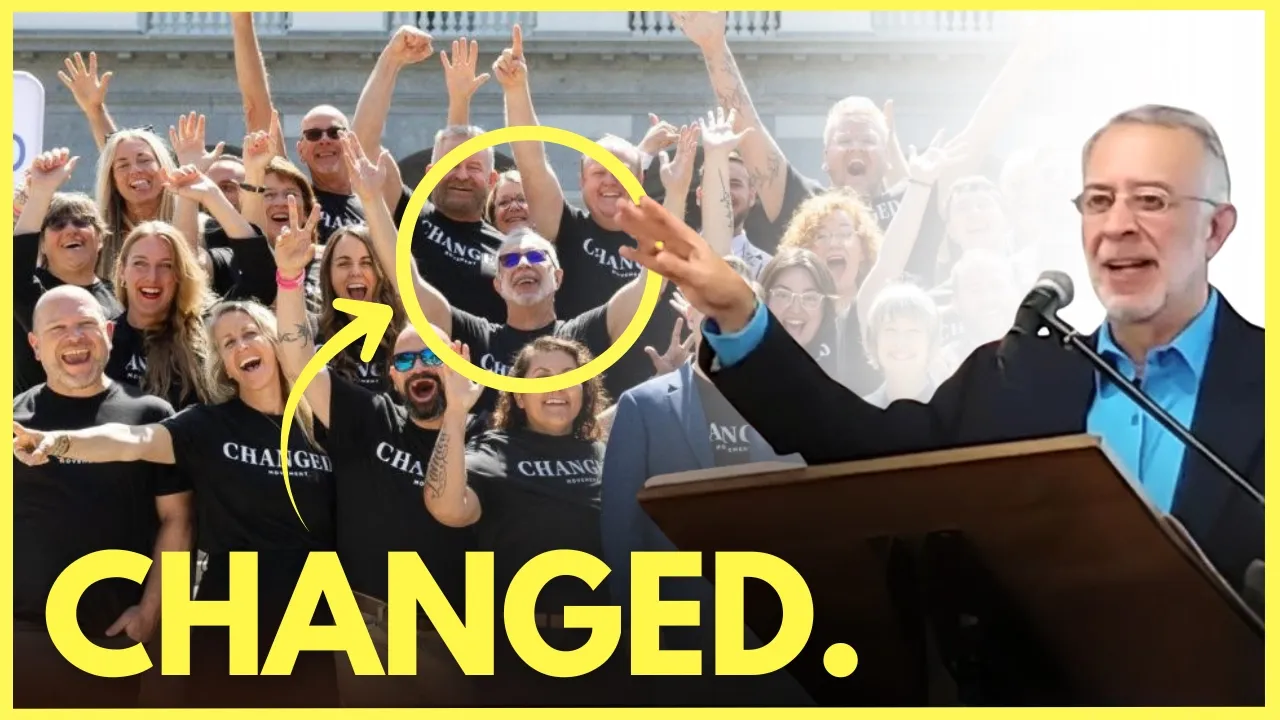
Dr. Joseph Nicolosi | The Dr. J Show
In this conversation, Dr. Joseph Nicolosi Jr. discusses the complexities surrounding same-sex attraction, the implications of conversion therapy laws, and the scientific basis for understanding sexual orientation. He emphasizes the importance of client self-determination in therapy and presents evidence that sexual attractions can change through techniques like memory reconsolidation. The discussion also touches on the role of childhood experiences, attachment theory, and the intersection of spirituality and therapy. Dr. Nicolosi advocates for a more open therapeutic community that respects diverse viewpoints and encourages parents to be vigilant in choosing therapists for their children.
Dr. Joseph Nicolosi, Jr. is a licensed clinical psychologist, researcher, and founder of the Reintegrative Therapy Association. He trains therapists in evidence-based methods for resolving trauma, addiction, and unwanted same-sex attractions. A sought-after international speaker, Dr. Nicolosi, Jr presents on the topic of sexual attractions and the latest scientific findings in the field. Grounded in scientific research, he advocates for client self-determination in therapy, empowering people to live consistently with their deeply held values.
Action Items:
- FOR THERAPISTS: Consider receiving training to offer this important care, especially in light of a decision from the Supreme Court expected in the summer.
- FOR ADVOCATES/ORGANIZATIONS: Check out the latest science and videos to know the truth to battle the ideologies.
- Training and Science can be found at ReintegrativeTherapy.com
- Follow Dr. Nicolosi, Jr on X: @DoctorNicolosi
Videos | Reintegrative Therapy: https://www.reintegrativetherapy.com/videos/
Reintegrative Therapy® Evidence-Based Treatment Interventions: https://www.reintegrativetherapy.com/
Reintegrative Therapy® (@Reintegrative_) / X: https://x.com/Reintegrative_
Joseph Nicolosi Jr., Ph.D. (@DoctorNicolosi) / X: https://x.com/DoctorNicolosi
Father Sullins:
https://youtu.be/Fgo82Jrg5Ik
https://youtu.be/9ckNnxbUbfA
https://youtu.be/zVZOOMnT1cA
00:00 Introduction to Conversion Therapy Laws
04:26 The Charles v. Salazar Case
07:05 Research and Therapy Techniques
07:56 Memory Reconsolidation Explained
09:19 Managing Emotions vs. Memory Rewriting
11:53 The Impact of Ideology on Therapy
14:58 Understanding Same-Sex Attraction
18:04 Attachment Theory and Its Implications
20:58 Intergenerational Patterns of Attachment
23:56 The HHS Report and Transgender Issues
31:11 Therapy and Same-Sex Attraction
34:25 Research on Sexual Attraction
36:52 Addressing Childhood Sexual Abuse
41:26 Unpacking Guilt and Shame
44:44 Spirituality and Therapy
48:32 Trauma and Shifting Attractions
54:58 Early Sexualization of Children
57:04 State of the Therapeutic Community
01:03:18 Guidance for Parents
01:05:06 Call for Research and Support
Subscribe to our newsletter to get this amazing report: Refuting the Top 5 Gay Myths https://ruthinstitute.org/refute-the-top-five-myths/
Have a question or a comment? Leave it in the comments, and we’ll get back to you!
Watch the full episode, uncensored, on Rumble: https://rumble.com/user/Theruthinstitute
Subscribe to our YouTube playlist: @RuthInstitute
Follow us on Social Media:
https://www.instagram.com/theruthinstitute
https://twitter.com/RuthInstitute
https://www.facebook.com/TheRuthInstitute/
https://theruthinstitute.locals.com/newsfeed
Press:
NC Register: https://www.ncregister.com/author/jennifer-roback-morse
Catholic Answers: https://www.catholic.com/profile/jennifer-roback-morse
The Stream: https://stream.org/author/jennifer-roback-morse/
Crisis Magazine: https://crisismagazine.com/author/jennifer-roeback-morse
Father Sullins’ Reports on Clergy Sexual Abuse: https://ruthinstitute.org/resource-centers/father-sullins-research/
Buy Dr. Morse’s Books:
The Sexual State: https://ruthinstitute.org/product/the-sexual-state-2/
Love and Economics: https://ruthinstitute.org/product/love-and-economics-it-takes-a-family-to-raise-a-village/
Smart Sex: https://ruthinstitute.org/product/smart-sex-finding-life-long-love-in-a-hook-up-world/
101 Tips for a Happier Marriage: https://ruthinstitute.org/product/101-tips-for-a-happier-marriage/
101 Tips for Marrying the Right Person: https://ruthinstitute.org/product/101-tips-for-marrying-the-right-person/
Listen to our podcast:
Apple Podcasts – https://podcasts.apple.com/us/podcast/the-ruth-institute-podcast/id309797947
Spotify – https://open.spotify.com/show/1t7mWLRHjrCqNjsbH7zXv1
Subscribe to our newsletter to get this amazing report: Refuting the Top 5 Gay Myths https://ruthinstitute.org/refute-the-top-five-myths/
Get the full interview by joining us for exclusive, uncensored content on Locals: https://theruthinstitute.locals.com/support
Transcript
(Please note the transcript is auto-generated and likely contains errors)
Ruth Institute (00:02)
I know, I know, we’ve all heard a million times that people are born gay and can never change. But in fact, science does not support this idea. Whether it’s the study of the human genome or studies of identical twins, the science is just not there to support the born gay idea. So if people aren’t born gay, what if they want some insight into why they actually do have same-sex attraction?
What if they want somebody to help them change their patterns of thoughts, behaviors, and desires? Is there anybody who can help? Hi, everyone. I’m Dr. Jennifer Roback-Morris, founder and presenter to the Ruth Institute, an international interfaith coalition to defend the family and build a civilization of love. I’m too delighted. I’m delighted that today’s guest is Dr. Joseph Nicolosi Jr. He’s a licensed clinical psychologist, researcher,
and the founder of the Reintegrative Therapy Association. He trains therapists in evidence-based methods for resolving trauma, addiction, and unwanted same-sex attraction. He’s a renowned international speaker explaining the latest scientific findings in this field. Most importantly to my mind, he’s an advocate for client self-determination in their choice of therapy to meet their life goals that are consistent with their.
deeply held values. I know you’re going to be fascinated by this conversation and you’re going to want to share it with your family and friends. Dr. Joseph Nicolosi Jr. Welcome to the Dr. J Show.
Ruth Institute (01:38)
Dr. Joseph Nicolosi Jr., welcome to the Dr. J Show.
Joseph Nicolosi (01:43)
Thank you for having me, it’s an honor.
Ruth Institute (01:45)
Well, it’s good to talk with you again. We did one of these shows a couple of years ago, but a lot has happened. And the Ruth Institute is more involved now in the issues that you’re concerned with than we were at the time that you and I first encountered one another. As a matter of fact, you and I both submitted briefs, amicus briefs to the US Supreme Court. Am I right that you submitted a brief in this case? So this is the case, Charles v. Salazar.
Joseph Nicolosi (02:08)
That’s right. Yes. Yeah. Yes.
Ruth Institute (02:13)
By the time this show is appearing, people would be talking about the case and knowing what it’s about a bit. But just tell people what is the Charles V. Salazar case all about and why is it important to you?
Joseph Nicolosi (02:28)
The case in a nutshell is an issue is the so-called conversion therapy laws. There are these laws that different states have banned, and at this point it’s about 50 % of the states. have bans for children, although in some cases it’s adults, to have access to talk therapy, voluntary talk therapy, that would help shift, that could help shift the person’s sexual attractions. And so…
On the surface, could seem like this is very protective. We’re protecting kids from coercion in therapy, and think any rational, ethical therapist would support that. However, these bans are introducing a lot of problems. For example, the government is now determining which viewpoints are or are not acceptable in the therapy room. Or let’s say an individual identifies as LGBT, and then at some point later on, the therapy says, you know, I think I want to explore heterosexual attractions.
You can’t do that because you’re influencing the attractions in a way that are not consistent with the person’s identity. So these laws were poorly written. They were written by activists. we believe, I believe, that everybody should have freedom and support to help them achieve their goals and outcomes. And individuals who want to live in accordance with their traditional faith, these laws are getting in the way of that. So it’s now reached the Supreme Court.
And we’re going to see what they say. The ruling should be out in June. But I think we’re going to get a very favorable response. I think that the First Amendment will prevail. And the government has no right to interfere with people’s voluntary talk therapy. And I think that people are starting to see that there’s a certain hypocrisy here with the current self-appointed leaders of the LGBT movement.
They’re welcoming people, especially young people, into homosexuality, but when some of those same individuals want to leave, then they’re blocking their options, so they can’t leave. It’s like it’s one-way acceptance. We accept you into LGBT, but you’re not allowed to leave. I think that’s, people are seeing that, and so I think that’s gonna have an influence in the case.
Ruth Institute (04:46)
Yes, and when they did oral arguments a few weeks ago, even Justice Kagan came out and said, you know, this sounds like viewpoint discrimination to me. You know, if a client comes in and says, I think I’m gay, I have same sex attraction, will you affirm my attractions? The therapist says, sure, that’s legal. But if he says, I want to change my attractions, then no, you’re not allowed to help.
Joseph Nicolosi (04:56)
Right. That’s
Ruth Institute (05:12)
So that sounds like viewpoint discrimination was the point that even, you know, a traditionally liberal judge like Justice Kagan made that point. So in your brief to the court, Dr. Nicolosi, what were some of the main points that you made in your brief?
Joseph Nicolosi (05:28)
I brought up how we were limiting talk therapy, how it’s viewpoint discrimination, how a person who wants to explore something different than their self-identified orientation should be able to make that choice. And we talked about, I brought up how it’s going to have a limiting impact on research because these laws are making it difficult to even do the research to show which interventions are acceptable or not acceptable. In fact, if you don’t mind,
Let me, if you would, let me segue into something. I just completed a randomized placebo control trial, and I’d love to show people a 30 second video of what it looks like when people are using one of the interventions that we tested.
Ruth Institute (06:12)
And so just to be clear, you know what, just to be 100 % clear with people, I’ve mentioned this in my tea up to you, but you are a therapist and you are a researcher into various kinds of therapy that would be helpful to people in this regard. So yeah, I would love to see this 30 second video. Let’s go for it.
Joseph Nicolosi (06:27)
Great.
we’re having them think of sexually arousing memory or fantasy. Think of something with unwanted sexual arousal. It’s rated zero to 10, how arousing is it to you? Actually in the study we did how arousing is it? How emotional is it? And how visually vivid is it?
All of those went down in eight minutes and the results are safe, effective, and durable. And we did follow-up and it’s a randomized control trial.
Under the Biomedical Research Alliance of New York, we did recruiting on UCLA’s campus for some of these participants. We had 144 participants. And yes, we can shift these reactions to unwanted sexually arousing memories and fantasies, and we can do it reliably.
Ruth Institute (07:50)
So what did you do that made the difference in these cases?
Joseph Nicolosi (07:56)
We use a process called memory reconsolidation. Memory reconsolidation is a three-step process. You reactivate a memory or fantasy. You introduce a contradictory experience, and you repeat that juxtaposition experience repeatedly. And it rewrites and re-encodes the target memory, and the results are permanent.
Ruth Institute (08:16)
And so the person is doing this themselves. You’re inviting the person, you’re coaching the person through this process. Okay. And so what would you say to somebody who said, well, this is coercive or manipulative? I mean, because that’s, I mean, isn’t that usually the objection? The objection to conversion therapy is that you’re somehow manipulating the person. How would you respond to that Dr. Nicolosi?
Joseph Nicolosi (08:19)
Yeah. Yeah. Exactly. Yep.
I’d say these are.
Everyone has the right to pick their own therapy goals and people have the right to have access to science and we have to move on from these old conversations. The science is progressing. We have to move with it and sexual attractions can change and people need to know that they have options and we’re making the instructions free for everyone. Anyone can go to reintegrativetherapy.com, click on science and you’ll get this. You can also put in your email address. We’ll give you a complete copy of the
of the paper that contains the instructions to what we did. We’re making it all free.
Ruth Institute (09:19)
So some time ago I interviewed Andrew Rodriguez, who’s also a therapist in this area, and he shared with me that one of the things he tries to do is to help his clients manage their emotional responses, you know.
And he would say something to them like, yes, okay, this thought, this feeling has come into your mind. You don’t need to become hysterical about it. You can manage the intensity of it. You can talk yourself off the ledge is kind of the image that I had. And his clients were like so surprised by that. Wait, you mean I have to do that every time? And I’m sitting over here, I’m a woman who’s been married for 40 years to the same person.
Joseph Nicolosi (09:48)
Ruth Institute (10:00)
And I know for a fact, you have to do certain things every time in terms of managing your emotions. And the fact that that was such a surprise, I never thought about that before, but for some people, it’s like a new thought that you can and you must manage your emotional responses. You don’t have to accelerate them or go with them or feed them or whatever. Is that in some way what you’re doing here is helping people manage?
their emotions or is it running deeper than that?
Joseph Nicolosi (10:31)
Totally different from that. Totally different. It’s okay. That’s okay. You’re not managing anything in this process. You’re actually dissolving and rewriting the memory network using memory reconsolidation. Think of your phone. Your phone has updates. And what happens when you download an update? It overwrites the old data and it replaces it with new. And that’s exactly what memory reconsolidation is. There’s nothing to manage. When we’re doing this process, people say it really
Ruth Institute (10:33)
sorry. see?
Joseph Nicolosi (11:01)
shifts their attractions. I mean, some of them have trouble even they can they can technically remember the event or fantasy, but they have to like recall it like it just feels like anything else. Like I had breakfast that morning, I met up with a person and had a sexual experience on one of these apps. And then I had lunch like it just becomes an event. It’s like, okay, I remember it doesn’t stand out doesn’t have an effect. It loses its euphoric recall.
And for some people that’s exactly what they’re looking for, that’s the freedom that they want. And for some individuals who have a particular ideology that they’re gearing toward children, especially, but gearing toward anyone, that’s terrifying to them. It’s scary to them that there are ways that the brain can just shift itself. And it does it automatically, and the results are durable.
Ruth Institute (11:48)
So, but I don’t understand the thing you just said. What is it that’s scary for people? Say that again.
Joseph Nicolosi (11:53)
It’s scary
for, well like I’m in California right now and they’re teaching children that if you have fill in the blank attractions, whatever those attractions are, that’s who you are and that’s who you’ll always be. If the L or G or B or T, whatever the alphabet thing is, you have these feelings, that’s your identity and that’s your future. That’s what they’re telling people. And we’re showing other individuals that that’s not necessarily true. That the brain has the ability to spontaneously rewire itself.
and that these attractions do not automatically equate to destiny and that no one is imposing an ideology. The brain has the ability to just rewire itself within minutes sometimes.
Ruth Institute (12:33)
And so the point is here that this is not the final word about your identity. And who’s scared of that? You said… I see, I see.
Joseph Nicolosi (12:39)
People who are pushing this ideology on children, people who are pushing
ideology that attractions equal identity and identity equals an immutable identity and those things are just not true.
Ruth Institute (12:51)
Right, right, and we already had reason to know that even prior to you coming up with this method. We already had evidence that would point in that direction because there’s so many people. Right, right.
Joseph Nicolosi (12:55)
Yes. Sure.
Absolutely. much. mean, you had
as a guest, think you’ve had Dr. Sullins, right? Yeah, so he’s the expert on it. I he shows a lot of data. You didn’t need my techniques. This stuff has been around for decades. But the public is not learning about it.
Ruth Institute (13:06)
yeah! Yeah, he’s my colleague!
So one of the things that’s striking in this area is the passion of the activists. As soon as we put this up, first of all, the Trevor Project will put a little warning label on it. Your name is toxic, my name is toxic. And so the bots will recognize that we’re having a forbidden conversation. And everybody will be redirected to the Trevor Project, which is an activist organization that promotes these types of views.
And it’s, and within minutes, there will be people making comments on our video who will be saying, nope, I was born gay. This is the way it’s always been. If I have a guest on Dr. Nicolosi, if I have a guest on who has journeyed away from it, they’ll say, he’s really still gay. He has a lisp, you know, or he wasn’t really gay in the first place, you know, all of this, and really very strong resistance to the idea that people could change.
What do you think accounts for that? Why are they so, why can’t they let somebody else have their story? I find that fascinating. I find it infuriating actually, but also fascinating. That’s not how people normally treat each other. What’s up with that?
Joseph Nicolosi (14:32)
This is not about sexuality, this is about worldview. There’s a clash of worldviews here. And when a person says, changed, that poses a threat to the radical LGBT ideology, which says this is how you, that your feelings determine your identity and your identity determines your future. It’s like a house of cards. And when a person walks away,
they feel the house of cards shaking, and that’s threatening to them.
Ruth Institute (14:58)
Yeah, yeah, that’s my sense too. Every chaste teenager is a rebuke to the sex ed ladies, you know, and every ex-gay is a rebuke to the gay activists. But this raises the question in my mind, if people are not born gay, what is it that causes persistent same-sex attraction in some people?
What’s your thought process about that, Dr. Nicolosi? What do you believe is the cause of persistent same-sex attraction?
Joseph Nicolosi (15:30)
We have to explore it always on a case by case basis. All I can tell you is I can look at the scientific literature and summarize it and I can tell you what my clients tell me and summarize that. Like any scientist, those are the two real sources of information that I can look at and try to synthesize. The idea, I’m gonna base this on right now, on psychoanalytic theory and the stories of the 600 men I’ve treated.
Ruth Institute (15:40)
Mm-hmm.
Joseph Nicolosi (15:58)
and what they have told me about their childhood. as I synthesize it, it’s basically like this. And anybody who wants to know more can go to reintegratedtherapy.com and examine the information there and watch the videos. But the idea is that as children grow up, they go through different developmental stages. And Dr. Morse, do you have any children?
Ruth Institute (16:17)
I do, I have an adopted
son and a birth daughter. so we had, and in that experience, as you may imagine, we had a pretty varied encounter with child development because we had one child who developed right on schedule. And then we had another child whose development had a lot of twists and turns because he had been profoundly neglected for two and a half years. So yeah, I have kids.
Joseph Nicolosi (16:25)
Yes. Yes. Yes.
Yes, yes. Good, well we’re,
so you know. So as kids grow up, they go through different developmental stages, and as you may have known, so you mentioned two and a half. I didn’t even know you about this story until just now. So the developmental stages for boys and girls are typically about the same until two and a half. Two and a half is what’s traditionally considered the gender identity phase of development. It is understood historically that the historical understanding in terms of gender or development,
is that this is the first time when a boy has an additional developmental task that the girl doesn’t have. Okay, let me say that again. That’s the first time that the boy has an additional developmental task that the girl doesn’t have, which is to disidentify from the mother and identify with the father. The mother is the primary attachment figure. We come from our mothers, we’re breastfed by our mothers, the mother is the primary attachment figure. Two and a half, the boy starts typically shifting over toward the father.
You can see this in cultures around the world. You can go to a daycare up the street from you, or you can go to other side of the world and to China and see this. This is well established. And the idea is that if the child is growing up in a home where the father is more distant detached and the mother is more temperamentally sensitive, sometimes higher anxiety, maybe sometimes intrusive, and if the boy is temperamentally sensitive, then those factors together, it’s the combination of the factors together.
that can make it more difficult for the boy during that specific phase of development. Now everything I’m telling you is psychoanalytic. There’s new data that affirms this model that came out recently, but the basic psychoanalytic model is that the boy will try to reach out to the father repeatedly if his attempts are not reciprocated. He experiences a hurt, retreats back to the mother, doesn’t make that gender identity shift. And as he gets older, girls, he knows like the back of his hand. He knows, he’s getting a lot of…
female attention-affection approval, but not as much male attention-affection approval. And as the years go on, he misses out on that kind of rough-and-tumble play and that kind of thing. And as this boy starts to reach adolescence and sexual attractions begin, where do his attractions gravitate to? Not towards females, who he views as safe and familiar, but toward males, who he experiences as mysterious, intriguing,
and exciting and the boy will often try to pray that these feelings will go away. He’ll try to ignore them or suppress them. kind of try different strategies but they typically do not disappear. And so what I just told you was a basic psychoanalytic understanding. I didn’t make this up. My father who was a psychologist, he did not make this up. This is a hundred years ago. This goes back to Freud. I have a book on my bookshelf. can actually grab it if you want me to. It’s the fact that gonna do that. Hang on. I’m gonna show you.
They say, don’t tell. I want to show you
So this is where it started, Leonardo da Vinci by Sigmund Freud. And I even have it tagged right here. So this book is about 100 years old, and Freud was the one who came up with this. And actually, Freud was the one who first wrote about it, and he got this idea from another therapist at that time. But Freud and Carl Jung, maybe I was a friend of Carl Jung and many others, they all said that they were seeing this developmental pattern. And so that is the idea.
We could go into it more and people want to know more, just go to reintegratedtherapy.com and we talk about these things. But this was their idea. this idea has come under a lot of scrutiny. There were pro-LGBT therapists and researchers who said, okay, look, we know that men who identify as homosexual are more likely to have estranged relationships from their fathers. And by the way, that’s clear.
from the research literature, clear. Every serious researcher agrees with that. We see it again and again and again. But the LGBT activists and researchers and others would say, okay, fine, but listen, we have a reverse explanation. So it’s not that the boy reached out to the father and experienced a hurt and pulled away. They would say, no, the boy was born gay. Okay, this is the LGBT argument. The boy was born gay.
Ruth Institute (20:34)
Joseph Nicolosi (20:58)
And the father is separate from him because of the father’s own internalized homophobia. case the father’s conscious or unconscious, he pulled away from the boy, and that’s why the boy is separated and he’s with other girls. And that’s why girls are often his primary friends. So a researcher set out to test this hypothesis. Her name is Sherry Golden, and she looked at a large number of men who were the father’s.
Ruth Institute (21:04)
Joseph Nicolosi (21:24)
of gay identified men. So she looked at the fathers of gay identified men. And she found that these fathers were more likely to engage in basically emotionally distant and disengaged fathering patterns. And then she looked at those fathers’ relationships with their own fathers. And she found out that those fathers in turn had similar fathering from their own fathers, meaning fathers who were more distant and disengaged, which she called
low involvement, low emotional engagement fathers. so, according to Sherry Golden’s research, and this is all available online, it is an intergenerational pattern of attachment, intergenerational attachment patterns through the male line that appears to set the stage for male homosexuality, according to Golden’s recent research, and she did the most robust research ever on this topic.
Ruth Institute (22:21)
And so this is recent. This is a new, this is relative.
Joseph Nicolosi (22:23)
Yeah, her doctoral,
relatively, it was based on her doctoral dissertation, which was in 2018. And then she did a study in 2021 on this by Sherry Golden.
Ruth Institute (22:34)
Okay, okay, very good. That’s very interesting to know because these themes come up. I’ve done quite a few interviews now with people who have left Pride behind and this theme comes up again and again. And what you just said there about each case being different, but the themes being the same, I hear the same themes from all these fellows. They all have some combination of an unavailable attachment figure, an unavailable or unattractive.
Joseph Nicolosi (23:00)
Yes.
Ruth Institute (23:03)
father figure, you know, and sometimes there’s complications with the mother and sometimes there’s sexual abuse. know, there are a number. It’s better. It seems like it’s better to think of it as a set of contributing factors as opposed to a cause, right? Because, we’ve talked about people who have followed the show have heard me talk about this in other ways, but
Joseph Nicolosi (23:05)
Yes, yeah. Yeah, exactly.
Ruth Institute (23:26)
the gay phenomenon itself, we can’t even define it perfectly. It’s a complex of things. It’s a complex of behaviors, thoughts, feelings, friend group, political alliances. There’s a whole package of stuff there. That can’t all be genetic. know, I mean, that just doesn’t, that’s not how it works usually. So this is very interesting, this study that she came up with, by intensively studying the parenting patterns. And how has her work been received, Dr. Nicolosi?
Joseph Nicolosi (23:56)
like all revolutionary thoughts, it’s ignored at first, laughed at or criticized when it starts to become more accepted, and hopefully one day it will become an acceptable thought. But anything in the field of psychology or anything that’s revolutionary or real shift, when you every challenge a predominant narrative, ignored first, criticized when it starts to get more well known,
and eventually I think it will be accepted. And we saw the same thing with Freud’s work. That was the sequence with Freud’s work. reintegrative therapy has been ignored, ignored, ignored. Now it’s starting to gain its criticisms because it’s starting to grow in visibility. And so that’s, think, at the stage where we are now. But HHS, in the last 24 hours, the Health and Human Services Department, has revised their views on gender, gender-confused kids and the treatment of gender-confused kids.
And they are now saying that transitioning can, so-called transitioning, can cause harm. And that was an idea that was mocked for quite a while, and now it’s starting to enter into mainstream science. But it was considered hate speech for the last decade.
Ruth Institute (25:05)
Right. So let me ask you about that. In your opinion, in what way, if at all, is transgenderism and homosexuality related to each other? Are they related? Similar causes? What do you think?
Joseph Nicolosi (25:24)
It’s not precisely my area of focus. I do have some awareness of the psychological literature on this, and I have treated some individuals with gender dysphoria. The pattern that I gave earlier with the father and the mother, what these clients tell me is an even more distant and even hostile relationship with the father. And the scientific literature seems to show that there are frequently signs of early attachment disruptions between the D.
the individual and the mother in the first few years of life. And I’ll give you a couple examples of that. One study, one large study found that individuals who identify as trans men, so biological men who identify as women, 45 % of them have a disorganized attachment style. 45%. That’s beyond exponentially what you’d find in a random sampling of the population. And the overwhelming evidence is that early childhood disruptions between the infant and the mother
have a significant causative relationship to developing a disorganized attachment style. It’s not the only cause. There’s genetic factors and other factors as well. There are prenatal factors that may also be at play. But it’s definitely clear that early relationship with the mother has a significant impact with developing a disorganized attachment style.
Ruth Institute (26:44)
to people what a disorganized attachment style is.
Joseph Nicolosi (26:47)
It is of the four attachment styles that are pretty universally agreed upon. It’s the one that you’re going to see the most infrequently. it’s the hallmark of it is a sense of inner disorganization within oneself, difficulty regulating one’s emotions, and an instability in identity. Now that could be in a gendered way or it could not be in a gendered way. It could be, I’m a terrible person, I’m a piece of garbage, or I’m okay, or…
there’s their identification instabilities.
Ruth Institute (27:21)
I know something about attachment disorder because when you have a badly neglected orphan, attachment, that’s the thing we were most afraid of was a complete attachment disorder. And some of the children who came from Eastern Europe around that time, we knew quite a few parents in that situation. We knew people who were dealing with it. Now, thank God our boy is fine. He’s actually very tenderhearted grownup man, you know.
Joseph Nicolosi (27:28)
That’s it.
Yes.
Ruth Institute (27:46)
So we dodge that worst bullet. So I know a little bit about attachment theory because of that. But the healthy, just walk people through it. Dr. Nicolosi, this is such an important topic. Attachment is such an important topic. What’s healthy attachment look like?
Joseph Nicolosi (28:05)
Yeah, so there are four attachment styles. Secure attachment is what most people are, and it’s generally thought to be what is the best attachment style to have. It’s a sense of inner security and stable relationships. Then you have anxious preoccupied, which are people who are of higher anxiety. They’re waiting for the other shoe to drop. They’re more prone to emotional dependency dynamics.
Then you have anxious avoidant, so people who stay detached from others. They oftentimes don’t get into long-term deep relationships. They have difficulty accessing deep emotions within themselves as the avoidant. And then you have the disorganized.
Ruth Institute (28:45)
that which you’ve already described. those come about, there may be a genetic component to them, but typically they come about because of parenting styles or something that’s happened in the child’s environment. Yeah. And so what is, just for everybody to know, what’s mom supposed to do to cultivate a healthy attachment? How’s that supposed to work?
Joseph Nicolosi (28:47)
Yes.
Yes. Yeah, exactly. Yes.
We want consistency in the relationship and consistent emotional availability. Children love consistency. They love that. So an emotionally consistent mother or father who is attuned and responsive to the parent and one quick definition of a secure attachment style.
is that in your relationship you trust that the other person is at least trying to meet your needs most of the time. They can’t meet your needs all the time, but they want to be responsive to you. And that’s a quick and dirty explanation of the central feature of a secure attachment dynamic. And so if the child gets the sense that my mom or father wants to be attuned to my needs, even if they can’t meet all of my needs,
but they’re trying to be responsive and they’re doing that on a consistent basis and at least wanting to understand what my experience is, then that is likely to lend itself to a secure attachment.
Ruth Institute (30:13)
Right, right. And part of what’s being developed there is trust. So if you can trust your mom, you can trust your dad, then you can trust the world around you. And when they tell you that you really shouldn’t walk out into the street, you’re going to believe them. When you’re turned loose, you’re going to mostly do what you’re supposed to do. You’re not going to be doing whatever you can get away with kind of thing. Because then you have some foundation for the development of
Joseph Nicolosi (30:18)
Yes.
Yes.
That’s
Ruth Institute (30:42)
of a conscience, which is another form of self command and self control really. Yeah, yeah, yeah. So I would like to go back to the HHS report and the controversy around it and the controversy around the whole transgender issue. And part of the reason I want to do that is because in the child’s case, Father Sullins and I also wrote this report, wrote an amicus brief. And we, in our report, we talked about the evidence that people
Joseph Nicolosi (30:46)
Yes.
Ruth Institute (31:11)
can benefit from therapy for same-sex attraction. And a number of people who wrote to support the plaintiff and the complainant and in in in childs, they they wanted to talk about gender identity because a lot of people are freaked out over transgenderism. A lot of people can see that there’s something really wrong with that and telling the kids that they must have a medical transition and that therapy is bad for you.
everybody can go, you know, there’s something really off about that. But our position is here at the Ruth Institute is just as bad to tell people they’re born gay as to tell them they’re born the wrong body, because both of those things are incorrect. And therefore, counseling and therapy can help and so on and so forth. So I’d just like to get your perspective on that whole controversy. don’t know how the court’s going to rule. You know, maybe they’re going to say
Conversion therapy can be banned for gay stuff, but not for trans stuff. There are a lot of public people who would say that.
Joseph Nicolosi (32:16)
I’m hoping that the court will be favorable and restore rights in the therapy room. that who should decide people, this is what’s really at stake, who should decide people’s therapy goals, the people or the politicians? Who should determine the course of therapy? And in a healthy client-therapist relationship, the clients in the driver’s seat. And they should be able to explore the options that they want.
Many of my clients are people of faith. Many of my clients are people with traditional background and a traditional worldview. They’re Muslims, they’re Jews, they’re Christians, and they want to live in accordance with their deeply held values. And we believe that the government should not be interfering with that. And consensual, voluntary talk therapy is a lot safer than drugging people up. And I’d rather live in a world where we have consensual talk therapy than in a world where the government is determining.
you know, what we can talk about in therapy. So that’s, you know, in terms of the Reintegrative Therapy Association, so reintegrativetherapy.com, reintegrativetherapy.com. We have videos, we have the peer-reviewed papers, we show the evidence that sexual attractions can change. And in this newest study, we weren’t just focusing on homosexuality. We had…
Ruth Institute (33:15)
Right.
Joseph Nicolosi (33:36)
People with same-sex attractions opposite sex attractions bisexual attractions. We had men where women it was a totally inclusive research design In fact, if you would I’d like to put up my infographic if you don’t mind this one show people What this is
Ruth Institute (33:49)
Sure.
Joseph Nicolosi (34:16)
I just like them to see so this is a very very quick summary of the of the study the study results here
So we had 144 participants. 144 participants. We used a randomized placebo control trial. And just to be very clear, this is not about homosexuality. This is about human sexuality. So the participants were males and females with two unwanted memories.
heterosexual, bisexual, or homosexual. We had them think of a couple memories that had arousal that they wanted to no longer be arousing. And we tested them before the intervention, after a week later, and a month later. And the results maintained a follow-up. we were talking about a single eight-minute intervention. And people were randomized to one of four groups, a placebo group, and then three treatment groups. All three treatment groups led to significant shifts.
the arousal, vividness, and emotionality of their unwanted sexually arousing memories decreased significantly. And this study was not something we just came up with. This study was overseen by the Biomedical Research Alliance of New York. And we had the cooperation of UCLA’s Office of Human Research Protection Program. I did recruiting on UCLA’s campus to get participants.
Of course, the media will ignore these results, but for those who are genuinely interested in the scientific evidence, you can see this. This is all available on reintegratedtherapy.com if anybody wants to know more. And we train therapists as well. That’s a part of what we do. We train therapists, and if there are therapists who want to learn these techniques, we have a basic training and an advanced training. We need therapists. There are so many people who want this. I’m hearing from therapists after therapists.
How do I help these people? And we made it specifically made as a treatment protocol so that therapists can learn this. don’t have to, you don’t have to worry about being accused of so-called conversion therapy. In these techniques, you are not imposing anything and it can’t be conversion therapy because you’re using the exact same technique for a person with unwanted heterosexual attractions. So it doesn’t matter what the person’s gender or sexuality is. It’s the exact same technique, therefore it can’t be so-called conversion therapy.
And our idea as a nonprofit is to give these tools to people and to make this information available to anyone who wants to.
Ruth Institute (36:52)
So let me just clarify something, because we have encounters and an interest, let us say, the Ruth Institute has an interest in people who have survived childhood sexual abuse, okay? And childhood sexual abuse is extremely destructive and has a lot of negative consequences. When you said you invite people to remember, to bring up a memory that they…
that they don’t like, you know, some unwanted memory. Could this type of technique be helpful to people who have experienced sexual abuse to take some of the sting? Would that be right to say it, kind of diminish the power of the memory? How would it be applied in a case like that?
Joseph Nicolosi (37:41)
that we use it all the time. I use it on Monday with a client of mine who had two sexual abuse memories. And it was very powerful. He wrote me after the session. He emailed me. said these changes were profound and powerful, he said. And what we’re doing is we’re having the client focus on, this may sound kind of controversial, but we have him focus on the positive feeling of the sexual abuse. Now many people will have a strong negative reaction when they think about it.
In many cases, when a child is sexually abused, it’s not like a guy jumped out of the bushes and raped a person. That would give a person typically just terror. Many of our clients were groomed by a trusted caregiver, and that’s the distinction here. When a child is groomed by a trusted caregiver who links an emotional need that the child wants, like attention, affection, approval, and links it with sex, when you get those two together, then that creates an insidious…
Ruth Institute (38:20)
Joseph Nicolosi (38:37)
connection between positive and negative affect. This feels disgusting, but I’m finally getting an emotion that I need. And children who are groomed are manipulated into this, and the grooming process makes it more easy for the perpetrator to give the child a feeling that the kid wants with sex. And so what we are doing in this technique is we’re having the client exclusively focus on the positive feeling. As crazy as it sounds, feel the good feeling of being bonded.
or connected. I’ll use my client earlier, who I talked to earlier this week on Monday. We did two sexual abuse memories. One of them was with an older guy who, this guy lived on a farm in another country when he was growing up and there was an older man on the farm and they were alone in a field and this guy sexually abused my client when he was about like 12 or something. But this man had been grooming my client and the
the client said, feel a sense of belonging. It was belonging. Now, later on, the sexual abuse experience quickly became violent, and that was pure negative emotion. But for a time, there was a feeling of belonging, and it was an intense hit of that feeling. There was a euphoric recall. And that client ended up going out and acting out with other men later on in his life, in many ways recreating that experience. The psychoanalyst called this a repetition compulsion. He would compulsively reenact this.
So we had him focus on the euphoric feeling. We did one of these techniques, and by the end of session, it was like wiped out. It’s like there was nothing that feels good about this. And then we can go into the negative affect. But by eliminating, by greatly reducing or eliminating the euphoric recall, that helps the client because he reports feeling less driven to engage in these compulsive sexual behaviors later on. Because there was a link in his mind between sex and the feeling that he wanted. We can unlink them.
And that is threatening to some people, to these many activists.
Ruth Institute (40:38)
Well, but not only that, in my conversations with survivors of these experiences, that partial positive, partial negative is extremely confusing for the child, right? Because there’s an aspect of it that feels good in the psychological ways that you were describing. For a boy, he might experience orgasm or something, and that feels good.
Joseph Nicolosi (40:51)
Barry.
Ruth Institute (41:04)
but it’s mixed up with these things that don’t feel good. They’re at the same time kind of instinctively ashamed. So the confusion of all of that is part of what takes them a long time to deal with. And so if you can wipe out that euphoric part of it that allows them, what do they do next when you’ve tamped down that euphoric thing? What’s the next step?
Joseph Nicolosi (41:13)
So more than the next step, the next experience they often report is a release of guilt. Because when a child is groomed, when the child is groomed and they have an arousal, a physiological arousal or an emotional good feeling, the perpetrator will often point to that and say, see, you did like this, you did want it. And so it’s confusing because it feels like it’s negating the negative emotions.
Ruth Institute (41:36)
Right, right,
Joseph Nicolosi (41:53)
the kid is like learning not to listen to the negative emotions because i did have a physiological response or there was a positive emotional experience so the perpetrator will use that as evidence that look you you some perpetrators will say you came on to me and so it negates the negative affect so once the positive affect is reduced or eliminated then there’s often a release of guilt because the the the the good feeling was holding that guilt in place once the good feeling is gone i want to feel guilty about this anymore now they’re left with the negative at
Ruth Institute (42:07)
Right?
Joseph Nicolosi (42:23)
And then after that, we can work on the negative affect that which is the rage, which is the disappointment, which is like the client I mentioned on Monday. The good feeling was belonging. It was a feeling of, why didn’t I belong? Why was I in the field with some guy, some weird farm worker? Like I should be home with my parents. Like I would, got this good feeling because I didn’t, I felt more belonging with this strange guy than I did in my own, in my own home. So then the affect arises about that, about why didn’t I not feel this way with my parents? So we’re flushing it out.
Ruth Institute (42:36)
You’re right.
Joseph Nicolosi (42:52)
That’s what we’re doing.
Ruth Institute (42:54)
that’s an interesting phrase. You’re flushing it out. You know, it’s like you have an image of flushing a wound with fresh water or something like that. And every time you do it, more stuff, more particulates come out and they’re no longer as infecting and all of that kind of stuff. That’s really interesting, Dr. Nicolosi.
Joseph Nicolosi (42:57)
That’s it.
Mm-hmm. Exactly.
That’s it.
That’s right. We have
a video on reintegrativetherapy.com. People just click on videos and there’s one video called, I think it’s called like Healing My Sexual Abuse. And you can see the exact, very, very similar situation right there. People can watch this. You can actually watch step by step what we’re doing. This doesn’t have to be a mystery anymore. Sexual attractions can change. I’m not saying they’ll change for all people. And let’s also be clear.
Ruth Institute (43:24)
Joseph Nicolosi (43:39)
When we talk about changes in sexuality, we’re not talking about flipping a light switch, gay to straight. That’s not what I mean. Other people may talk like that. That’s not how I’m talking. I’m not talking about flipping a light switch. I’m talking about rotating a light dimmer. We’re talking about gradual shifts of varying degrees. So no two people respond the same. No one can guarantee an outcome. And for many people, a shift of just a few degrees is what they need to live in accordance with their values.
Ruth Institute (43:53)
Mm-hmm.
Joseph Nicolosi (44:07)
Or maybe that shift in a few degrees is just one step in their overall journey in life, and that’s fine. I’m happy to be a small part in their overall journey and that the therapy can be helpful. That’s great. Maybe they have a spiritual component, because many people would say, my sexuality is not just psychology. There’s spirituality. There’s a spiritual part of this in my relationship to God and my morality. So the psychological component is just one part, but we’re here to help with that one part.
Ruth Institute (44:07)
Joseph Nicolosi (44:37)
we can now reduce that euphoric recall. And the data is now out there.
Ruth Institute (44:44)
And part of the reason this is important is because between sexual abuse and unwanted same-sex attraction and addiction, I don’t know, but there’s probably a way that you can treat addiction using these type of terms. Because I’ve noticed, you know, there are a number of, there are a number of, what would you call them? Peer counseling methods and things like that. Desert stream living water, be broken. You know, there are a number of them where
Joseph Nicolosi (44:58)
Yes. Yes.
Ruth Institute (45:14)
What works with same-sex attraction also tends to work with porn addiction, also tends to work with, you know, so there’s a common root here. And what has been, what has happened, let’s go back to the grooming case. My thoughts are all over the place. This is a new thought for me, a lot of what you’re sharing with me, but let’s go back to the kid who was groomed, okay? He might have experienced himself as I was always this way. I was born this way.
Joseph Nicolosi (45:19)
Yes.
That’s
Ruth Institute (45:44)
This
guy came on to me because he knew that I was the kind of kid who, right? And so when people say that, I always knew there was something different about me. I want to say, I believe you. I’m not going to argue with you on that point, but I don’t think it means what you think it means. Help us flush that out a little bit, because I know that’s going to come up in the comments, Dr. Nicolosi. I know somebody’s going to say that. So help us.
Joseph Nicolosi (45:47)
Yes.
Right.
Fine. I wouldn’t
Ruth Institute (46:14)
Help us work that out.
Joseph Nicolosi (46:14)
even argue. I wouldn’t even argue with the client. would now, I think that you could easily say, look, if a person abuses you, that has nothing to do with you, okay? But I wouldn’t even get into an argument. Okay, fine. I’d say, listen, what is an unwanted arousal? For you, I’d say, pick the most, and I usually start this way, pick the most powerful one you can possibly think of. Most powerful fantasy or memory that goes against your deeply held value.
and think about the fantasy, find the peak moment, the moment of it that has the highest arousal, really connect to it, and then we do this process that you people can see on reintegrativetherapy.com. And then we do this process and we see a significant lasting shift in the euphoric recall. And when we see that, when the person goes, I can re-access it and I don’t feel that arousal anymore, that’s very powerful because it teaches the person not intellectually,
but on a felt level, it gives the person an experience that my unwanted sexual attractions are a state and not a trait. My attractions are a state and not a trait. And that begins the uncoupling process between the attractions and the identity. wait, my attractions can come and go. They’re not even a stable construct to begin with. So if we can unlock this and, my attractions can come and go.
Now we start to see, and this is what I’m doing with the research. I do these psychological assessments, and we have one called the sex fantasy questionnaire, and we see significant shifts in the sex fantasy questionnaire. But eventually we start seeing a fixed, shifts in the overall structural assessments, the Kinsey scale, the Klein sexual orientation grid, for those of you who are interested in the research. And we can start to see that the identity starts shifting. And we’re doing it by going into the positive, here, if you’re psychoanalytic.
We go after the id, and then the ego, we don’t even deal with the ego and the superego. We deal with that feeling, and as the id shifts, then the ego starts shifting as well. And it’s like, gee, I don’t see myself as a person who is drawn toward those things. And it was through no ideology, there’s no, no one’s imposing an ideology. The brain is actually just shifting itself when those things that were arousing just become no longer arousing.
Ruth Institute (48:32)
And another thing that I’ve heard from people, and I want you to help me integrate this into your thought process and your approach. I have heard people say that I had childhood trauma, I went to a therapist who helped me address the childhood trauma, and over time as I did that, the pattern of attraction’s changed. Why does that happen? How does that happen? Because they’re not using the technique you’re talking about, at least not directly, they’re not. But how does that work in your opinion?
Joseph Nicolosi (48:50)
Yes. Totally.
Only that.
No, no.
Right, so there’s a technique called, an approach called the reintegrative protocol, and that was studied by Pila and Sutton. Pila and Sutton looked at that. In the reintegrative protocol, we only focus on trauma memories. That’s it. That’s really what we’re working on. You work on the trauma memories. When we worked on the trauma memories, and that was 75 men, 75 men, when we worked on the trauma memories,
As a spontaneous byproduct, they started noticing their sexual attraction shifting. And they were not trying to shift them, it was just working on trauma. And they noticed significant decreases in the unwanted attractions, and their identity began shifting as well. That study is available on reintegrativetherapy.com. In full, you can see the full paper.
Ruth Institute (49:46)
And so what’s happening is that they are indirectly dealing with the traumatic memory or the, yeah. And you, what your technique has done is to just zoom right in on it and not take six months to sort it out or whatever it is, being to zoom right in on The other thing that I hear quite, that I’ve heard quite often is people having spiritual experiences of one sort or another. You know, I’ve had people talk and tell me, you know, I decided, you know, I felt that I had an encounter with Jesus.
Joseph Nicolosi (49:52)
Exactly.
Ruth Institute (50:16)
And I want, I want you, Jesus, I want you. Jesus, take this away from me. Take this same-sex attraction away from me. Make me straight. And they give up and they say, I just want you. Okay, maybe I have to struggle with this for my whole life, but I just, want you. You are more important than this other, than whether I’m ever straight or ever have a, get married to a, but you’re more important. How is that working? I mean,
Joseph Nicolosi (50:37)
Right.
Ruth Institute (50:43)
I’m listening to these people and they’re describing it as miraculous and I believe that they experience it as miraculous. How does that fit in with what you’re describing, Dr. Nicolosi?
Joseph Nicolosi (50:54)
This is a great illustration of the distinction between psychology and spirituality. Psychology needs to stay in its lane. Psychology should not be denigrating the spiritual experiences of other people. If other people are having spiritual experiences, great, that’s their spiritual experiences. Sometimes psychologists can denigrate those experiences. And I believe there are people who have incredible shifts in their lives, and those stories need to be told.
Ruth Institute (51:20)
Right, right. But how does it line up with the technique that you’re using? Or does it? Is it just completely separate? Or, I mean, I believe that it can be set completely separate, but there’s another, it’s the grace and nature business that we have as Catholics. And not everybody’s Catholic and you all Protestants, please listen up here. You know, that grace builds on nature and, right?
Joseph Nicolosi (51:27)
Yeah. Fair.
Yeah, exactly. Right. Sure. Sure. Sure. That’s grace builds upon
nature. That’s the concept. Right. Right. Right. So the Reintegrative Therapy Association takes no stance on anything religious because we have Jews, Christians. We just started now with a Muslim. This is this week starting a Muslim Reintegrative Therapist.
We don’t take any official position. We don’t even take an official position on the cause of homosexuality. We don’t take any positions on anything like that. The only position we take is that clients should be able to pick their own therapy goals. That’s it. But other than that, I would say that I have had clients come to me and say that yes, when the arousal is shifting, I’ve had numerous clients say, it feels like a spirit is being pulled out of me. I’ve heard quite, in fact, a guy, think even this week said that.
I feel like there’s a spirit that’s been with me over me since I was young, because we worked on a memory, a sexual memory when he was about 10 years old. It was really foundational. And we reduced that euphoric recall within a session. I think this was a biggie. took us like a session and this memory. It was like a session and a half. But he said, I feel like something’s been released. And he said, I feel it’s like a spiritual shift that’s occurred.
Ruth Institute (52:55)
Yeah.
Yeah. That’s really interesting. But what you just said sparked another memory of another conversation that I had with somebody that his sexually traumatic memory had to do with stumbling over pornography, homosexual pornography, when he was eight years old. And he and a bunch of other boys, they found it and they’re looking at it. was really, this particular boy was…
Joseph Nicolosi (53:18)
Ruth Institute (53:23)
perhaps particularly sensitive boy, he thought it was horrible. And the other boys started trying to act it out and different stuff like that. And that, he never did anything himself. He never did anything himself, but the memory, that experience, was a sexual trauma for him to be exposed to that. Comment on that, doctor.
Joseph Nicolosi (53:34)
Yeah.
Yeah. Well, that was the story of my guy three days ago. Not the guy who the guy I was just mentioning, where it took a session and a half. He wasn’t actually doing anything, but he and there were two other boys and he was telling the two boys to do different sexual things with each other. He wasn’t even doing anything, but he felt tremendous guilt and he swears by this. He said that was a spiritual experience in a negative way. I feel like since that time there’s been something over me. We’ll call it guilt.
call it a spiritual thing, I don’t know what it was, but I felt like there was like a sense in me that this is who you are, you’re a really bad person, the fact that you felt good about this shows how bad you really are. And once the good feeling left, then he felt released from the guilt.
Ruth Institute (54:28)
Wow, that’s really, that’s so interesting. That kind of story, particularly the thing that had to do with pornography, brings a question in my mind that often nowadays children are exposed to sexual material way beyond what they should be exposed to given their age. Whether it’s the explicit pornography, whether it’s inappropriate sex ed that they’re seeing in schools, comment on that a little bit if you would, the early sexualization of children.
Joseph Nicolosi (54:58)
In general, when it comes to addiction, the data indicate that earlier onset is associated with more like, more, it’s, earlier onset is associated with subsequent severity. So if a person is drinking alcohol and they had their first drink at 12 instead of 32, like if that person is more likely to struggle with alcoholism in a more severe way, gambling addiction,
There are variety of addictions, but compulsive sexual behavior disorder. So the World Health Organization recognizes compulsive sexual behavior disorder, which can include pornography addiction. And we see that earlier onset, earlier exposure to pornography is linked to a greater severity later on. doesn’t mean it will always happen, but there is a statistical association. Cigarettes as well. Having your first cigarette at
17 is different from having your first cigarette at 37. There’s something about our brains and the frontal lobes that we think, those developing areas of the brain, that make us more sensitive to emotionally dysregulating experiences and getting hooked into them at younger ages.
Ruth Institute (56:14)
Mm-hmm, that’s really interesting. I’d like to shift now, if we could, a little bit to the state of your profession. You’re trained as a psychologist, right? Or, okay. And the therapeutic community, by and large, seems to be overwhelmingly favorable to the sexual revolution in just about every dimension, not just in this dimension. That appears to me to be the case.
Joseph Nicolosi (56:24)
Yes.
Ruth Institute (56:42)
If you were to look at your profession, I’m sure that the people who are attracted to you are people who are more towards the religious end of the spectrum, people who are not endorsers of the sexual revolution and so on. Do you have a sense of what the proportions are within the profession overall? I’d just like to hear your thoughts about the state of your profession.
Joseph Nicolosi (57:04)
I really don’t know its majority left-wing. That’s, I think, pretty clear. It’s majority left-wing. But I really don’t know. I’m not sure. I know there’s an organization for clinicians, if a person is a therapist who’s listening to this right now. There are many therapists who are getting fed up with the American Psychological Association’s political stance. they’ve created, recently some therapists have created what might be a competing, it’s becoming a competing organization called the Open Therapy Institute.
And so for individuals who are interested in finding a therapist who doesn’t always line up with the APA or for other therapists who want training that doesn’t fall under the APA’s political stuff, then the Open Therapy Institute, it’s more, I mean, it’s in the name, it’s open. It’s open to a variety of viewpoints and they don’t shy away from criticisms of what is going on politically within the American Psychological Association right now. Open Therapy Institute.
Ruth Institute (58:02)
Okay, that’s a great resource. That’s really good to know. And you’ve mentioned a couple of times that your organization provides training for therapists. Talk to us a little bit about that. How would people find that training, what’s involved?
Joseph Nicolosi (58:10)
Yes.
We offer training to therapists worldwide. If you’re a professional therapist, now if you’re a pastoral counselor or non-professional, then we can’t help you. But if you are a professional therapist, psychologist, psychiatrist, if you are in any way licensed to do professional counseling, then you qualify if you want to join one of our trainings. You can go to reintegrativetherapy.com.
reintegrativetherapy.com and let us know that you’re interested in the training and we’ll let you know when the next training is. And we have two levels, the basic training where we train you in the reintegrative protocol and then the advanced training where we show you the different techniques that we did in this randomized trial that I was talking about earlier. And we show you those very, very targeted techniques.
Ruth Institute (59:06)
And so you now have a professional association of the reintegrative therapists. You guys have your own meetings and your own journals and different things like that. yeah, and by golly, you need them because as you know, don’t, well, actually, you probably have stories about papers being rejected or papers being retracted. Now that’s the new thing. It’s been in the literature for,
Joseph Nicolosi (59:13)
Yes.
Yes. No journal yet. No journal yet.
yes, yes, that’s it.
Ruth Institute (59:35)
you know, for decades, we have to pull it out because some activists beat the door down and, know,
Joseph Nicolosi (59:43)
The next two papers that I’m working on, one is under peer review right now with a bioethics journal. So maybe bioethics will be more favorable to us. another, I’m current, I think we just completed peer review on another journal. It’s a Muslim journal. And the Muslims are great. The Muslims are great about this. I spoke to these journal editor, these guys in, I forget, think it was in Saudi Arabia. I said to them, guys, listen.
Ruth Institute (59:52)
Joseph Nicolosi (1:00:09)
If I submit a paper like this, I’m just curious, know, if a bunch of purple haired women come to you screaming, would you retract it? And laughed and they laughed. We said, think that, we think that stuff’s funny. They said, these, you know, these Muslim men from Saudi Arabia, they said, your paper is safe with us. Don’t worry. So we have one coming up in Indonesia next that should be out in the next month. And in the Muslim countries, they say, don’t worry. We care about the scientific evidence.
Ruth Institute (1:00:30)
Wow.
Joseph Nicolosi (1:00:37)
We care about the data. We don’t care about anything else. We don’t care about is someone offended or not offended. You are welcome here. And I think to myself, wish many of the, I won’t name names, but I wish that some of the Catholic editors would be a little more strong. because there are these courageous Muslims who are saying, we just care about scientific evidence. That’s it. And those are the journals that I have such great respect for.
Ruth Institute (1:01:04)
Right, right. And the fact is, you’re walking around with bad information, you can’t function well. I mean, are a lot of people now calling attention to the increased mental health crisis across America and so on and so forth. And I’m thinking to myself, well, if you’re walking around with ideas that are half-baked, you can’t possibly build a life around things that are false. I mean, that just doesn’t work. Sooner later, you’re going to feel bad.
Joseph Nicolosi (1:01:12)
That’s
Ruth Institute (1:01:32)
And if nobody’s there to help you because they’re all committed to the craziness, you know, it’s pretty grim. Dr. Nicolosi, we’re coming towards the end of our time. I want to make sure that you give our people something to do, something constructive to do. You’ve mentioned that if people are licensed therapists and they’re interested in this, you’ve told them where to go and how to get the training. And I hope that a lot of people will do that because I imagine you have some waiting lists for.
for clients.
Joseph Nicolosi (1:02:02)
are things that people can do if you’re a therapist You’re always welcome to go to reintegrative therapy comm and look into our trainings sign up for our email list Anybody can sign up for the email list to know what we’re doing We’ll give you free Access to things or videos etc. Share our information on social media. You can follow on on Twitter at dr. Nicolosi doc
at drnicolosi.com and share this information with others. We need this. We need to get this information out here. People deserve to know the truth and our long-term goal is to take these treatment protocols, have them standardized, train therapists, and then a person can go anywhere in the world and have access to good mental health care, where you can have a person who respects your traditional values and will give you access to these treatment protocols to
Ruth Institute (1:02:58)
And do you have anything special to say to parents who may be looking for a way of helping their teenage child or early adolescent child? Any situations where they should not take their child to therapy or what do you recommend for parents?
Joseph Nicolosi (1:03:18)
should be case by case. Whoever you see as your therapist, you should really check out the worldview of that therapist. That’s what I would do if I were in a situation like that. Regardless of what you do, really look into the worldview of your therapist. Who is this person who is going to have an influence on your child? That’s where I think.
Ruth Institute (1:03:39)
Yes, yes. Because sometimes you hear about parents taking their child to somebody who has a worldview that’s aligned, and then the child is highly resistant, and then they’re back in the home, and it increases the conflict within the home. And so those situations seem to be particularly fraught. I wonder if there’s anything you can say to those parents.
Joseph Nicolosi (1:04:06)
The parents need to be checking in on what’s going on with these therapists and how they’re influencing your kids’ mean, there’s some evidence now that therapy for children is actually, in many ways, doing more harm than good. It actually raises their anxiety and raises their depression. And if anyone wants to know about that, Abigail Schreier just did a book on that called Bad Therapy. She’s a New York Times bestseller. Abigail Schreier, a common sense person, a writer for the Wall Street Journal, Bad Therapy by Abigail Schreier.
And that really is a tour de force on this topic.
Ruth Institute (1:04:38)
Okay, when not to go to therapy, you know, maybe you as parents figure out what you need to do as parents inside your home or your family dynamics and that type of stuff, but dragging your kid off to therapy and say, fix my kid, probably not a good idea. Yeah. Do you have any other parting thoughts that you’d like to share with us, Dr. Nick Losey?
Joseph Nicolosi (1:04:42)
Yeah, that’s right. That’s
If anyone is a researcher watching this right now and you’d like to be involved in research, we need researchers involved. You don’t have to be a therapist or maybe you know of a researcher, but we want to do more and more research into this. We want other researchers to help us. Or if anyone’s interested in providing donations, we could use donations because these studies are expensive. These studies are really expensive. So if anyone is willing to…
Consider donating we are a 501 c3 nonprofit. It’s tax deductible and we can use all the help we can get
Ruth Institute (1:05:40)
Well, Dr. Joseph Nicolosi, this has been a very interesting conversation. Lots of twists and turns, a lot of information I didn’t know, and I wish you every success with all the people that you’re trying to help. Thank you so much for being my guest on today’s episode of The Dr. J Show.
Joseph Nicolosi (1:05:58)
Thank you, thank you, Dr. Mores, thank you.
👉 Watch the full uncensored video on Rumble or on Locals
Know someone who needs to hear this? Share this post. The truth heals.
Have a question or a comment? Leave it in the comments, and we’ll get back to you!
Subscribe to our YouTube playlist: @RuthInstitute
Follow us on Social Media:
https://www.instagram.com/theruthinstitute
https://www.facebook.com/TheRuthInstitute
https://theruthinstitute.locals.com/newsfeed
Press:
NC Register: https://www.ncregister.com/author/jennifer-roback-morse
Catholic Answers: https://www.catholic.com/profile/jennifer-roback-morse
The Stream: https://stream.org/author/jennifer-roback-morse/
Crisis Magazine: https://crisismagazine.com/author/jennifer-roeback-morse
Father Sullins’ Reports on Clergy Sexual Abuse: https://ruthinstitute.org/resource-centers/father-sullins-research/
Buy Dr. Morse’s Books:
The Sexual State: https://ruthinstitute.org/product/the-sexual-state-2/
Love and Economics: https://ruthinstitute.org/product/love-and-economics-it-takes-a-family-to-raise-a-village/
Smart Sex: https://ruthinstitute.org/product/smart-sex-finding-life-long-love-in-a-hook-up-world/
101 Tips for a Happier Marriage: https://ruthinstitute.org/product/101-tips-for-a-happier-marriage/
101 Tips for Marrying the Right Person: https://ruthinstitute.org/product/101-tips-for-marrying-the-right-person/
Listen to our podcast:
Apple Podcasts – https://podcasts.apple.com/us/podcast/the-ruth-institute-podcast/id309797947
Spotify – https://open.spotify.com/show/1t7mWLRHjrCqNjsbH7zXv1
Subscribe to our newsletter to get this amazing report: Refute the Top 5 Gay Myths https://ruthinstitute.org/refute-the-top-five-myths/
Get the full interview by joining us for exclusive, uncensored content on Locals: https://theruthinstitute.locals.com/support
About the Ruth Institute
The Ruth Institute is a global non-profit organization, leading an international interfaith coalition to defend the family and build a civilization of love.
Jennifer Roback Morse has a Ph.D. in economics and has taught at Yale and George Mason University. She is the author of The Sexual State and Love and Economics – It Takes a Family to Raise a Village.
To get more information or schedule an interview with Dr. Morse, contact media@ruthinstitute.org.
Refute the top 5 Gay Myths With Our Ebook & Get Our Newsletter
Join us on Locals for exclusive content*!
*Censorship free!


Get all of our video content on Rumble*
*Also censorship free