

Note: This review discusses themes of clerical abuse and grooming but does not include graphic detail.
I recently had the privilege of reading The Devil in Rome by Rachel Maria Mastrogiacomo.

Very few stories have struck so close to home or moved me so deeply as Rachel’s. There were countless moments when I had to stop and take a moment to collect my thoughts. I found myself saying, “Yes… exactly,” very often since many parts of her experience felt achingly familiar. At times, it was as though I was reading parts of my own story. That made it difficult to get through, and yet I couldn’t put it down.
One of the first things I want to note is what this book is not. It is not graphic. As a survivor that is a gift in itself. The explicit details that may be necessary in a courtroom are not necessary for readers to understand the reality of abuse. Rachel communicates the truth with clarity and restraint. She allows readers to grasp the gravity of what happened without being overwhelmed by unnecessary detail.
What this book does exceptionally well is illustrate the reality of grooming. As I read, I found myself recognizing pattern after pattern—subtle tactics, calculated steps, and manipulations many survivors of clerical sexual abuse experienced. Grooming is not abrupt. It is slow, intentional, and deeply deceptive. A skilled predator does not begin with obvious violations. Instead, he methodically breaks down boundaries, gains trust and entangles not only the victim but often those around her/him. Reading Rachel’s account regarding grooming brought back moments where I found myself thinking, “Yes… he did that too.”
This is one of the many reasons clerical sexual abuse is so profoundly damaging. When the abuser is a priest, the manipulation cuts to the deepest parts of the soul. Faith itself becomes a tool of exploitation. A victim’s love for God, desire for holiness, trust in the Church, devotion to Our Lady and the saints—all of it can be twisted and used against her. Vulnerabilities, past wounds, and insecurities are strategically targeted.
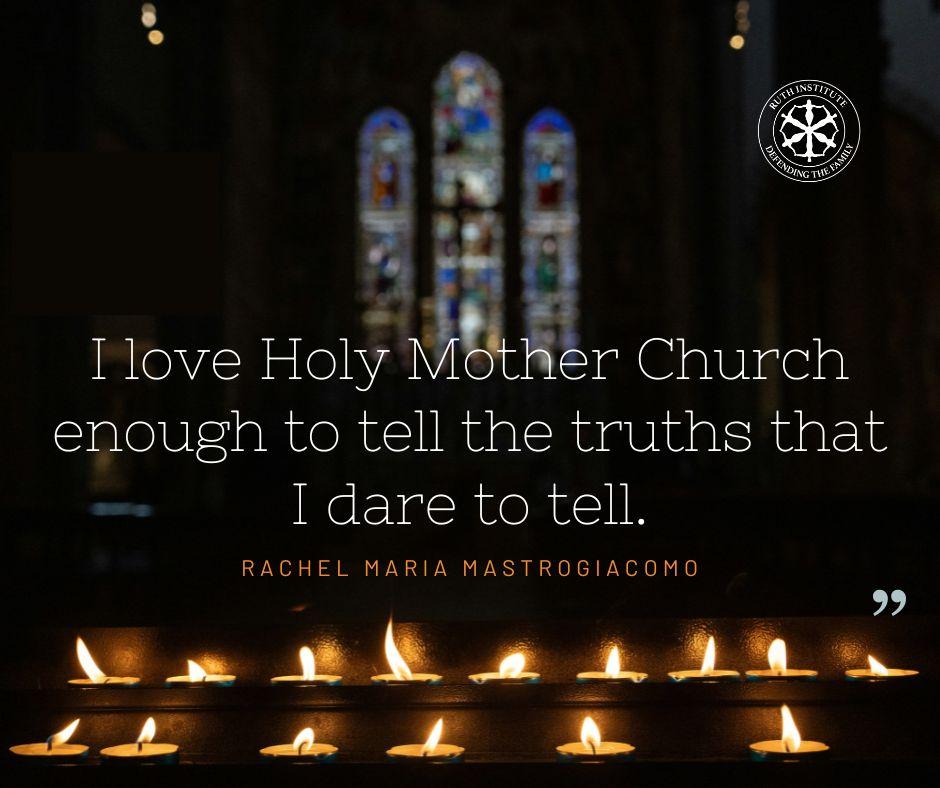
It is also important to mention that this book is written by someone who loves the Catholic Faith and still does. Too often, survivors of clerical abuse are dismissed as people trying to “tear down the Church.” In reality, many of us desire the opposite. We love the Church enough to want her purified. Rachel’s story reflects that same desire. She is in not trying to cause destruction. She is only telling the truth while fighting for accountability and renewal.
Anyone brave enough to tell this sort of story often finds themselves walking through a deep and painful spiritual battle, and it is truly awful that Rachel and her husband have had to endure such intense criticism in the process. Her account points to the calculated pattern of someone who understood how to manipulate, and he used that awareness to great harm. As a result, many people have been wounded in ways that are not easily seen. Abuse of this kind is deliberate and often carefully concealed beneath a convincing exterior that can disarm even the most discerning. Because of this, even those who have no personal connection to Rachel or her abuser can be drawn into distorted narratives that place blame on the victim.
Rachel also confronts realities that many are deeply uncomfortable acknowledging most notably, satanic clerical abuse. It is often easier to dismiss what we do not understand or have not personally encountered. Yet humility calls us to recognize that evil does not always appear in obvious or familiar forms. Some realities remain hidden precisely because they are meant to be. Clerical abuse itself remained concealed for decades, and many victims are, even now, still unseen and unheard. As unsettling as it is, we should not be surprised that corruption can run deep, or that evil can take root even within sacred spaces. These are difficult truths but ones worth reflecting on.
As a survivor, I am deeply grateful to Rachel for the courage it took to tell her story. This is not an easy book to write, nor an easy book to read. I found myself crying, feeling anger, and at times even smiling, especially in the moments where she shares the beauty of her family life, her marriage, and her enduring love for her Faith. I do not know Rachel personally, but I feel a profound connection to her as a fellow survivor and as a sister in Christ.
There are no perfect words to capture a story like this. So, I will simply say: read this book. You will come away with a deeper understanding of grooming, a clearer glimpse into the hidden suffering of victims, and perhaps even a renewed appreciation for the beauty and resilience of the Catholic Faith.
Few people could endure what Rachel has and still speak of the Church with love. That alone is a testimony worth listening to.
“My life is not defined by what happened to me, but by the joy of Jesus.”
– Rachel Maria Mastrogiacomo –
This book is especially important for survivors, parents, clergy, and anyone who wants to better understand how grooming works and why victims often remain silent.
In future posts, I will be exploring these themes more deeply especially the reality of grooming and the spiritual manipulation that makes this form of abuse so devastating.