

Every so often, I come across comments online that reflect a growing attitude among some Catholics: a weariness (sometimes even resentment) toward continued conversations about clerical abuse in the Church.
You’ve likely heard it too.
“Why are we still talking about this?”
“This was dealt with years ago.”
“Other institutions are just as bad.”
“Bringing it up just harms the Church.”
“Everyone suffers! We don’t need to focus on this anymore.”
These are not isolated opinions. They reflect a common thread running through many corners of the Catholic world—a desire to move on, tune out, and leave the past in the past.
I understand that these reactions often come from a place of exhaustion. As Catholics, we love our faith. We love the Church, and we’re tired of seeing her dragged through the mud. Many fear that continually spotlighting abuse gives fuel to those who want to tear the Church down entirely.
However, speaking as a survivor of clerical abuse and someone who still deeply loves the Church, I have to say this clearly: being tired of hearing about the clerical abuse crisis is a luxury.
Covering Evil Hurts the Church
Victims don’t get to “move on” just because others have grown uncomfortable. We live with the consequences of abuse every single day. The truth is that this crisis is far from over. Many survivors have never been acknowledged. Some cases are only now coming to light. The damage is ongoing. The culture that allowed abuse to flourish has not disappeared. It has simply grown quieter, more sophisticated, and in some places, more hidden.
No, this was not entirely “dealt with years ago.” Pretending that it was only delays justice, healing, and reform.
Yes, abuse exists in other institutions. That’s true and it’s tragic. Yet, it doesn’t excuse what happened in our Church. In fact, it should compel us to lead the way in transparency, repentance, and renewal. If we are the Body of Christ, then we should look and act different. We should be holy, courageous, and accountable.
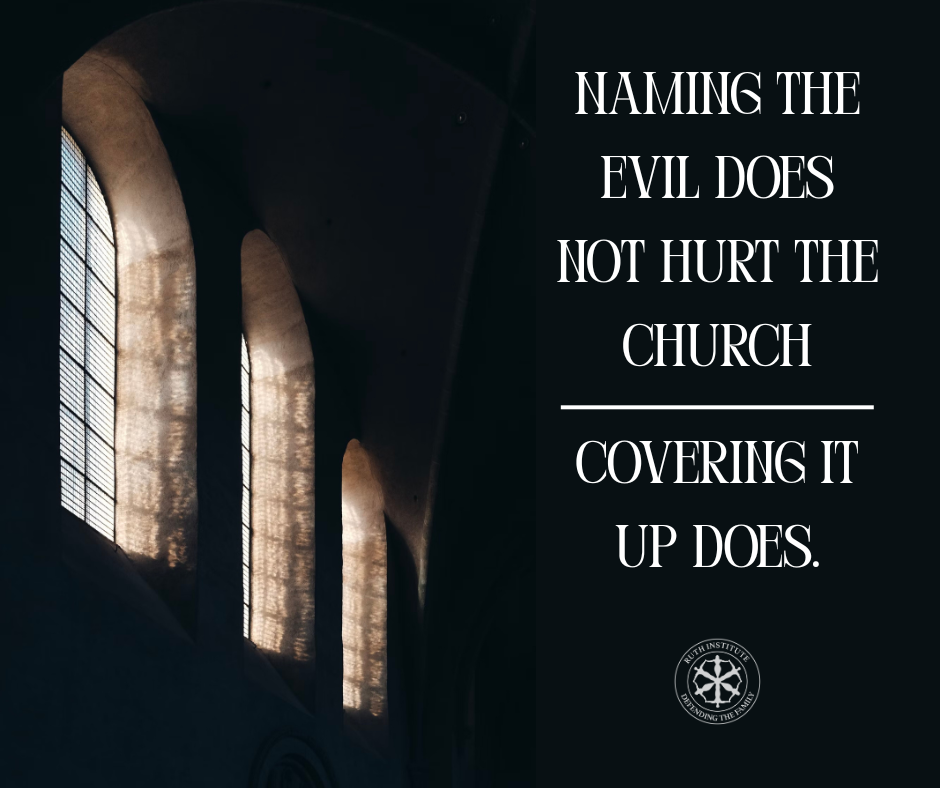
Some fear that acknowledging the abuse scandal harms the Church. Here’s the real truth: naming the evil does not hurt the Church. Covering it up does. Silence protects no one but the abuser. Discomfort is no excuse for inaction. To ignore the scandal is scandalous in and of itself.
Let’s be honest: when someone responds with anger or mockery to efforts for healing and justice, it may not just be defensiveness—it may be avoidance. Sometimes those who push hardest to silence the truth are the ones who have something to hide, or who simply cannot bear to face what is broken. Yet, Christ calls us to truth. Always.
Catholics Need to Take the Lead
If you’re uncomfortable hearing about these issues, I truly do understand. It is uncomfortable, and it should be. We love the Church, our traditions, the sacraments, and our priests. None of us want to see our faith used as a weapon. And yes, there are many people who exploit the scandal to try to destroy the Church. This is why it’s all the more important for faithful Catholics to take the lead in responding rightly.
Make no mistake: it’s people who have failed—not the faith itself. There are countless good, holy, faithful priests and laypeople within the Church who are doing beautiful work for the Kingdom of God. That hasn’t changed.
If you’re expecting the human element of the Church to be perfect, you’re not only disillusioned, you’re living in la-la land. Christ never promised perfection in His followers. He called us to humility, repentance, and truth.
So, if you find yourself uncomfortable or frustrated by these conversations, I invite you to lean in and open your heart and mind rather than pulling away.
Ways to Help
Here’s how you can help:
• Educate yourself. Learn about the roots of the abuse crisis, the structures that enabled it, and the real stories of survivors. Read Church documents, reputable journalism, and listen to survivors’ voices. The Ruth Institute has lots of information available on its Clergy Sex Abuse page.
• Pray intentionally. Offer Masses, Rosaries, and sacrifices for victims and for the renewal of the Church. Pray especially for holy priests and courageous leaders.
• Hold the Church accountable with love. True love doesn’t ignore wrongdoing. Rather, it calls for repentance and reform. Stand with survivors, demand transparency, and be a voice for justice.
• Examine your own heart. If your first reaction is defensiveness or dismissal, ask why. Is God calling you to a deeper compassion? Perhaps he’s calling you to confront a truth you’ve avoided.
Jesus would never turn away from the wounded. He would never look the other way while His Church suffers. Neither should we.
This is not about tearing down the Church. It’s about building her up on truth, on justice, and on the love of Christ who said, “Whatever you did for the least of these, you did for Me.”
Let us not be afraid to face the brokenness. Let us face it with Christ and begin the work of healing together.