

I’ve lost count of how many times I’ve heard confident, well-meaning parents who insist, “Oh, my kids tell me everything. We have a great relationship! If anyone ever touched them or made them uncomfortable, they’d come to me. They come to me with everything.”
I used to try to gently correct that kind of thinking. Now, I usually just smile sadly, say a quick prayer, and let it go.
The truth is that most parents don’t want to hear what I’m about to say. It’s uncomfortable and challenges the illusion of safety and confronts a reality that no parent wants to imagine possible.
Here’s the truth: the fact that you have a good relationship with your child does not mean they will absolutely come to you if they are ever abused or exposed to something harmful.
Understanding How Predators Work
Abuse doesn’t usually happen in a dark alley. It actually most often happens in families, in schools, in churches, on sports teams, etc. In short, abuse typically happens in places where trust is expected. Predators don’t just prey on children. When necessary, they also groom families and entire communities (the Catholic Church sex abuse scandal is one example of that). Predators are often able to gain a parent’s trust, learn where the family’s vulnerabilities are, and how to become “one of them.”
Then, they begin the slow process of grooming the child by building trust, confusing boundaries, and blurring right and wrong. By the time the abuse happens, the child is already confused and their world has already been turned upside down. Children who are groomed into silence often don’t even recognize what’s happening as abuse until long after it’s over. The predator is in control of their victim, and they have manipulated them into believing they’re at fault, that no one will believe them, or that they’ll get in trouble for telling.
You may think, “But my child knows they can come to me! They know I’ll listen to them and believe them!”
Yes. They probably do, and yet they still might not.
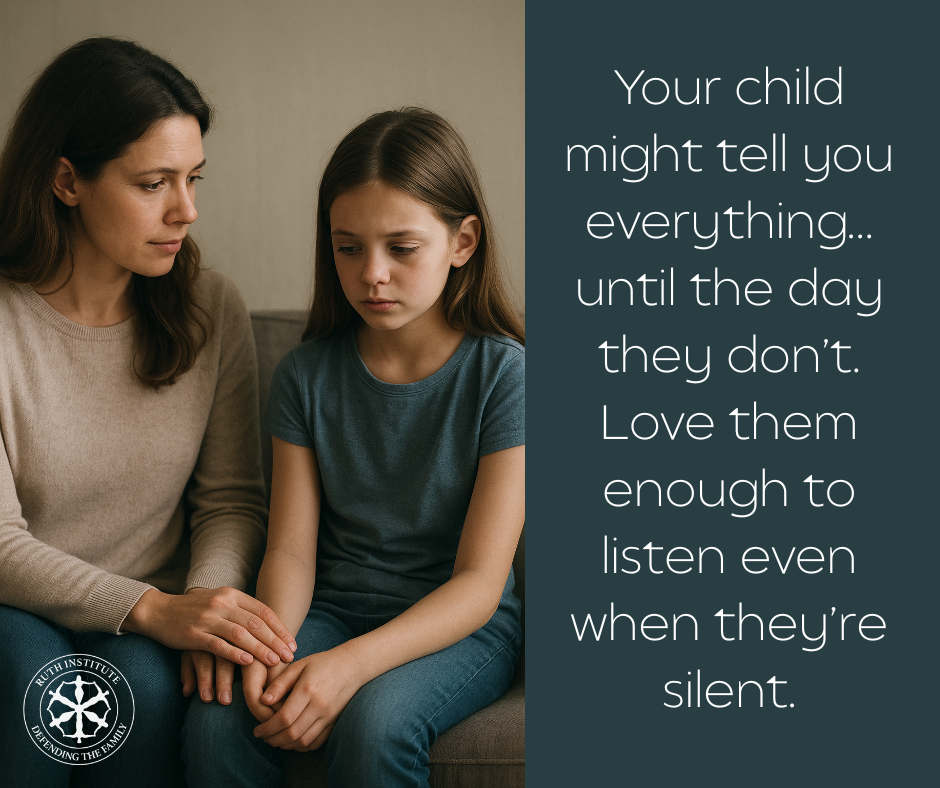
“Your Child Tells You Everything… Until They Don’t.”
I speak from experience, and I’ve seen this time and time again among other survivors of sexual abuse. I had a healthy, loving relationship with my parents growing up. They were attentive, nurturing, and honest about predators and abuse. They told me to come to them if anyone ever touched me inappropriately. I knew that’s what I was supposed to do.
And yet, when my parish priest began abusing me, I said nothing. A part of me wanted to but I chose not to.
I didn’t stay silent because I didn’t love or trust my parents. Rather, it was because the shame was crushing, the confusion was paralyzing, and because the person who hurt me was someone everyone (including my parents) trusted. I felt responsible, dirty, and afraid.
So I stayed silent.
It wasn’t until a few years later that the sudden and unexpected death of my oldest brother (he had a heart condition) sent me into grief therapy. At that point, everything finally came to the surface. I just couldn’t contain the trauma of my brother’s loss and the trauma I’d buried from the abuse. They collided and only then did my parents find out what had really happened.
That’s often how it goes. A child may carry the secret for years, even decades. The pain doesn’t disappear. It festers. The family that once believed, “Our child would tell us,” is left reeling, wondering how they never saw the signs.
The Shame Factor
Shame is one of the most powerful silencing tools of abuse. It causes victims to believe psychological lies such as: You’re disgusting. It’s your fault. You’ll ruin your family if you tell. No one will believe you anyway.
Even in homes full of love, that shame can be strong. It can be strong enough to come between the bond between parent and child. This is especially true when the abuser is someone the family respects or admires.
This doesn’t just apply to physical sexual abuse. Similar patterns can often be seen in children who come across pornography. They feel ashamed, dirty and terrified their parents will be disappointed in them.
The guilt and secrecy can lead to the same behavioral changes you might see in an abused or bullied child. A child might pull away emotionally, be irritable, experience sleep disturbances, regression in behavior, anxiety, depression, or an unexplainable drop in academic performance.
What Parents Should Watch For
Even if your child isn’t telling you something is wrong, their behavior will often tell part of the story. Here are a few things to look for:
• Sudden personality changes: A happy, outgoing child becomes withdrawn or anxious.
• Regression: A child starts wetting the bed or clinging excessively to you.
• Avoidance: They suddenly don’t want to be around a certain person or attend a particular activity.
• Changes in sleep or appetite: Nightmares, insomnia, loss of interest in food.
• Sexualized behavior or knowledge: Talking or acting in ways beyond their developmental age or in ways you have not exposed them to.
• Secrecy with technology: Quickly closing devices when you enter the room, or behaving oddly around technology.
• Unexplained mood swings: Sudden anger, sadness, or fear that doesn’t seem connected to any particular clear cause.
To be clear, signs such as these don’t automatically mean your child has absolutely been abused, but they are red flags that something is wrong. At the very least, they show that something is going on that deserves your gentle and compassionate attention.
How Parents Can Respond
1. Create an environment of safety and not fear.
Instead of saying, “If anyone ever touches you, tell me right away,” try, “If anyone (or anything) ever makes you feel uncomfortable or confused, I will always believe you, and it’s never your fault.”
2. Teach healthy boundaries early.
Help your children understand what is and isn’t appropriate touch, and that they can always say “no,” even to an adult. Teaching healthy boundaries isn’t just about touch either. If our children have any access to technology, we need to teach them about those boundaries as well. It’s far too easy to access inappropriate content or for predators to reach our children online.
3. Stay calm if they disclose something.
Your reaction will shape how safe they feel sharing details. Even if your heart is breaking, stay calm, breathe, and listen. You can say something like, “Thank you for telling me. I believe you. You did the right thing.” Your child doesn’t need you freaking out. That’s not going to help anyone especially your child. What they need is your calm strength, support, and love. They need to feel safe. You can let it all go and collapse at a later time when the child isn’t around. At that moment, though, you need to be the parent and be strong for them.
4. Know who’s in their circle.
Be aware of the adults and children your kids spend time with (both online and offline). Ask questions and stay actively involved.
5. Model openness and humility.
Sometimes parents unintentionally create an environment where kids fear disappointing them. Let your children see that mistakes and struggles can be met with love and grace rather than anger or shame.
6. Watch for silence.
When a child stops talking about their day, their friends, or their feelings, pay attention. Sometimes silence speaks louder than words.
A Loving Wake-Up Call
I don’t say any of this to instill fear or guilt. My goal is not to make parents paranoid. I want parents to be aware.
I speak, not only as a survivor, but as a parent of six children. I believe deeply in the power of family. I say it because too many children, including children in faithful, loving homes suffer in silence.
Predators thrive in silence. Awareness breaks that silence.
So to every parent who says, “My child tells me everything,” please remember this: they tell you everything… until they don’t.
The best thing you can do is to do your best to maintain and nurture the relationship with your child/children, and make it easier for them to come to you if/when they need to or finally decide to.
That moment may very well be the moment that saves their life.