
This movie review was provided by a friend of The Ruth Institute, Gail Finke, producer of the Driving Home the Faith radio show, of which Dr. Morse is a regular guest.
You’ve probably seen this movie too many times: Young boy, smallest and weakest in his class, just wants to dance (or play guitar, or draw) but is forced by his tyrannical father to “be a man” and play football (or excel at kung fu, or go to military school). His burning need for his father’s approval turns into an even more burning hatred for authority… until one day years later, a woman or a gay man uncovers his secret talent and he changes the world with his flashing feet or lightning-fast solos or brilliant paintings, while his weeping mother and girlfriend (or boyfriend) applauds.
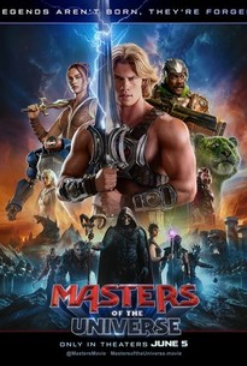
I’ve seen it too. And so many people thought the summer epic fantasy adventure film “Masters of the Universe” (based on the 1980s cartoon “He-Man and the Masters of the Universe”) was going to be just like it, that it wasn’t the box office smash it deserved to be. Word of mouth helped it to rally, but if it’s gone from the large screen in your area, be sure to catch it streaming, especially if you have children (minor caveats below).
In its very first moments, “Masters of the Universe” upends every one of those tired movie tropes about men, women, fathers, and sons. It opens with ten-year-old Prince Adam of Eternia (Artie Wilkinson-Hunt) telling regal but nurturing Queen Marlena (Charlotte Riley), that he doesn’t want to go to combat practice because he’s the smallest and everyone else can beat him. When she asks him what he’d do instead, he says he’d rather just hang around the palace and play with his pet tiger, so Mom pats him on the head and says, “off to combat practice!”
Shocker number one.
At combat practice, Adam is indeed the smallest and weakest and no one will be his sparring partner. His friend Teela (an adorable Eire Farrell, probably a year or two older and more than a head taller), asks him to practice with her. It’s an obvious bid to save him from embarrassment, but embarrassed he is, so he starts joking and acting silly to make her laugh—as so many boys in such situations do. Just then, his father, King Randor (a sober and regal James Purefoy), stops by to watch. Upset that Adam is making a fool of himself, he makes the boy face him in a sword fight he can’t win. While Adam is lying on his back, humiliated in front of the whole class, King Randor makes him repeat the words, “This world is no place for the weak.”
But instead of berating him or letting him lie there stewing about the oppressiveness of patriarchy, the king’s Man at Arms (Idris Elba) kneels beside and urges him to get up, with words of his own for Adam to repeat: “A man always gets back on his feet.”
Shocker number two.
Little Adam struggles up and waits for his father to look back and see a man standing on his feet, but the king doesn’t look back and the Bad Guy (Jared Leto as Skeletor) attacks, launching the rest of the movie. Prince Adam will be sent into an alternate world (ours) to save his life—King Randor wasn’t being macho when he said Eternia was no place for the weak, he was being literal! Adam must grow up, regain the magic sword that is his birthright, find a way home, defeat the bad guy, and retake his kingdom.
It’s a classic setup for a rousing adventure, and director Trevor Knight doesn’t disappoint. There are fabulous sword fights, gun fights, and spaceship fights; good and evil sorceresses who aid and thwart; skull-shaped castles and snake-shaped towers; monsters and heroes and a skull-faced villain with a spectacularly evil laugh; and a rousing soundtrack featuring guitar solos by Brian May. And of course, adult Adam (Nicholas Galitzine) regains the sword and uses it to become “the Champion of Greyskull,” a super strong, super fast, muscle-bound hero who can beat a roomful of monstrous enemies at a time.
But he’s also a fish out of water. Adam has grown up on Earth and, when he locates his sword, works in an HR department whose boss (a hilarious Sasheer Zamata) does not think constantly searching online for swords is work-appropriate. Taking “mild mannered” to new levels, Adam spends his days at workshops on teambuilding or helping people practice their dialogue and listening skills. So when he returns to Eternia and finds the remnants of the King’s Guards are now led by Teela (Camila Mendes) and living in hiding, he is once again the weakest… and now, clueless too. Can Adam go from HR’s “He/Him” to Eternia’s “He-Man?”
Spoiler alert:
He can.
The film is camp where it should be—its main characters play their parts straight but, like the cartoon, it’s rife with bad jokes and bizarre creatures and a gloriously evil villain. But where it counts, the script is earnest and its heroes are allowed to be heroes. Though in a drunken stupor for about 10 minutes of film time (another modern movie trope quickly dispatched), Duncan the Man at Arms takes his own advice to get back on his feet and becomes the ultimate coach and substitute father. Teela has to save the initially hapless Adam, but not for long. And Adam doesn’t hate his father the king, he loves and will do anything to save his lost parents. In a pivotal scene, he’s thrown to the ground by enemies in front of King Randor—who, this time, sees him get back on his feet to fight again.
There is talk about feelings, but it’s short, practical, and manly. And though Adam tries his HR skills on Skeletor, he gets a response that’s much more in line with reality than most proponents of “dialogue” would like to admit is possible. He is the true Champion of Greyskull in part because of his inborn compassion for others, but back on Eternia he learns when compassion is called for and when it’s time to get out the sword. When he does—look out.
In short: It’s a rousing popcorn movie all ages can enjoy. On top of that, it tells boys that being small and always picked last won’t last forever. You’ll grow up, and you can grow up to be a hero. The cute girl who is taller and stronger now won’t be taller and stronger forever, and the father who worries that the world is too big and perilous for you will see that you’re a man.
A few quick notes for parents:
Violence:
There’s plenty of cartoon violence, but no gore. Like previous cartoon heroes in this vein (SHAZAM’s Billy Batson, DC’s Batman), Adam fights things that are half-human and half monster, some of which come across as nightmarish when realistically portrayed in live action. Adam is supposed to be 25, but Galitzine plays the part as if he’s about 16, and displays a boyish delight in his new giant muscles and super strength that is perfect for an audience of boys who want to see themselves in He-Man. The hint of romance is similarly appropriate for all ages. Although Adam wears very little when he becomes the Champion of Greyskull, he is never portrayed as sexy or filmed in a way meant to be arousing.
Language:
There are a few blue words, and Skeletor makes an off-color comment about Adam’s thighs and sword that most kids will probably not notice, but the biggest concern for parents is a running gag about character names. Like “He-Man” and “Skeletor,” many of the original cartoon character names (Mekaneck, Trap Jaw, Fisto, Ram Man, etc.) are goofy. The film explains these as names Prince Adam invented for everyone when he was so young that he didn’t understand double entendres and crude words, and so repeats them cluelessly as an adult. The script makes this into a joke (the characters groan or become outraged) that eventually culminates in some of them saying the same sorts of things and being similarly corrected, the last correction coming from Adam himself. It’s amusing, but a misstep in a movie meant for all ages.
Sex:
Fans of action movies who are tired of women characters beating up men and monsters are hyper-sensitive to “girl boss” characters, and as the Captain of the Guard, Teela is both a girl and a boss. However, she rescues Adam because Eternia needs him, and the longer the film goes on, the more everyone needs him. She is in charge at first because of an absence of competent men, but soon Adam and Duncan are back to their rightful places and she is a brave, resourceful, and skillful partner.
Race:
Duncan was a white man in the cartoon, which led to much online grumbling about “race swapping” from people tired of changing an established character’s race or sex for no good reason, but in this case it’s an obvious case of color-blind casting (he’s Teela’s father, and the relationship is played straight without any tortuous attempts to explain that she was adopted or that genetics isn’t a “thing” on Eternia). Elba is absolutely perfect for the role—if you wouldn’t want Idris Elba to be your coach and substitute dad, I don’t know what to tell you other than “get a grip!”