By Paul Sullins October 6, 2025, at The Public Discourse
Whatever else one might say about the therapy bans in question, they undeniably burden the free exercise of religion for same-sex-attracted or gender-confused persons who seek not to identify with or live according to those conditions.

In America, therapists can provide nonjudgmental help for psychological distress due to divorce, adultery, prostitution, promiscuity, polyamory, pornography, pedophilia, and many other issues related to sexual choices and behavior. If you want to amend your behavior—for example, to stop viewing pornography or acting promiscuously—talking with a trained therapist can often help bring personal insight and strength to do so.
You can get such help for every problem, that is, except two: in a growing number of places in America, if a young person struggles with same-sex attraction or a desire to be the other sex, it is illegal for a therapist to help him try to reduce or avoid acting on either of those desires. In these jurisdictions, the therapist is required, by law, to affirm that internal gender identity or same-sex attraction is unchangeable and that the hormonal or surgical alteration of sex characteristics is “natural” and “healthy.” Currently, twenty-nine states and several dozen cities or counties have fully or partially banned therapies that may take a different approach. Violators are subject to hefty fines, typically five figures per violation.
The LGBT activists, psychologists, and legislators who support this therapeutic restriction denounce the alternative as “conversion therapy,” claiming that it attempts to forcibly cure innate and unalterable sexual desires or identity, often through aversive or painful techniques. In their view, such efforts cannot succeed and must therefore be deemed psychologically harmful. In fact, efforts to “cure” homosexuality by associating homosexual impulses with painful electric shocks or bitter drugs have not been made since the decline of behaviorism in the 1970s. Before then, they were the mainstream standard for psychological treatment.
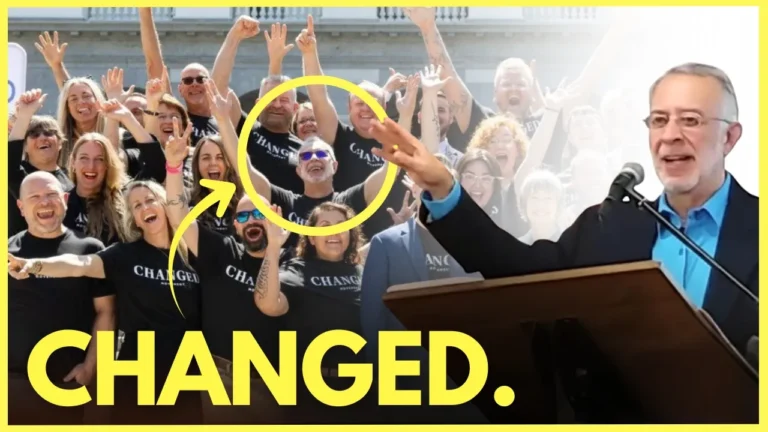
Today’s therapy for those troubled by same-sex desire or other-sex gender identity typically addresses, by voluntary benign talk therapy, possible related conditions such as early childhood trauma or poor parental relationships. Because resolving such distress can often (though not always) reduce same-sex desire or gender-identity confusion, proponents and practitioners refer to such therapy as “change-allowing therapy.” The Reintegrative Therapy Association, the largest network of change-allowing therapists, describes its practice as “interventions designed to resolve traumas and develop greater attachment security,” in which “changes in sexuality are a byproduct rather than a goal of the therapy.”
Client accounts of change-allowing therapy and similar interventions report them to be highly effective and psychologically beneficial. More than 85 percent of young people struggling with gender identity confusion who receive psychological support to remain in their natal sex chose not to become transgender. About two in three non-heterosexual people who engage in change-allowing therapy experience reduced same-sex attraction and increased heterosexual attraction; one in six describe themselves as possessing fully heterosexual attractions following therapy. The overwhelming majority also report reduced, not increased, depression, anxiety, and suicidality.
Whatever else one might say about the therapy bans in question, they undeniably burden the free exercise of religion for same-sex-attracted or gender-confused persons who seek not to identify with or live according to those conditions. For most who undergo it, the journey away from homosexual or transgender identity is a journey from a life organized around the self to one centered on God. Change-allowing therapy clients are overwhelmingly religiously serious Catholics, evangelical Protestants, Mormons, or Muslims. Repeated survey samples reveal that former LGB-identified persons are far more religious than current LGB-identified persons, who are in turn far less religious than the average American. Weekly church attendance, for example, is reported by 33 percent of all Americans, only 9 percent of LGB persons, but a whopping 88 percent of former LGB persons following change-allowing therapy. By contrast, 69 percent of LGB persons reported never or seldom attending church, compared to only 2 percent of change-allowing therapy clients. Clearly, those same-sex-attracted persons who change sexual orientation are more deeply engaged in religion than those who do not do so.
Change-allowing-therapy ban advocates, who argue that sexual orientation must be affirmed because it is at the core of identity, do not seem to understand that this is not true for most individuals who seek change-allowing therapy. An academic guide to “affirmative therapy” with religious persons observes, “Many of these individuals [seeking change-oriented therapy] do not identify with their sexual orientation at all but rather highlight their values and their religious beliefs as their primary identity.” Psychologist Lee Beckstead’s study of fifty same-sex-attracted persons seeking sexual-reorientation therapy reported that all of them “were willing to give up their sexual identities in return for religious and societal rewards because, as they stated, they felt their sexual identities were peripheral to their religious identities.” Due to their strong religious commitments, these study participants “felt that ‘being gay’ was not a valid choice for them.”